The Three Inheritances
Antiquity, late antiquity and the Renaissance
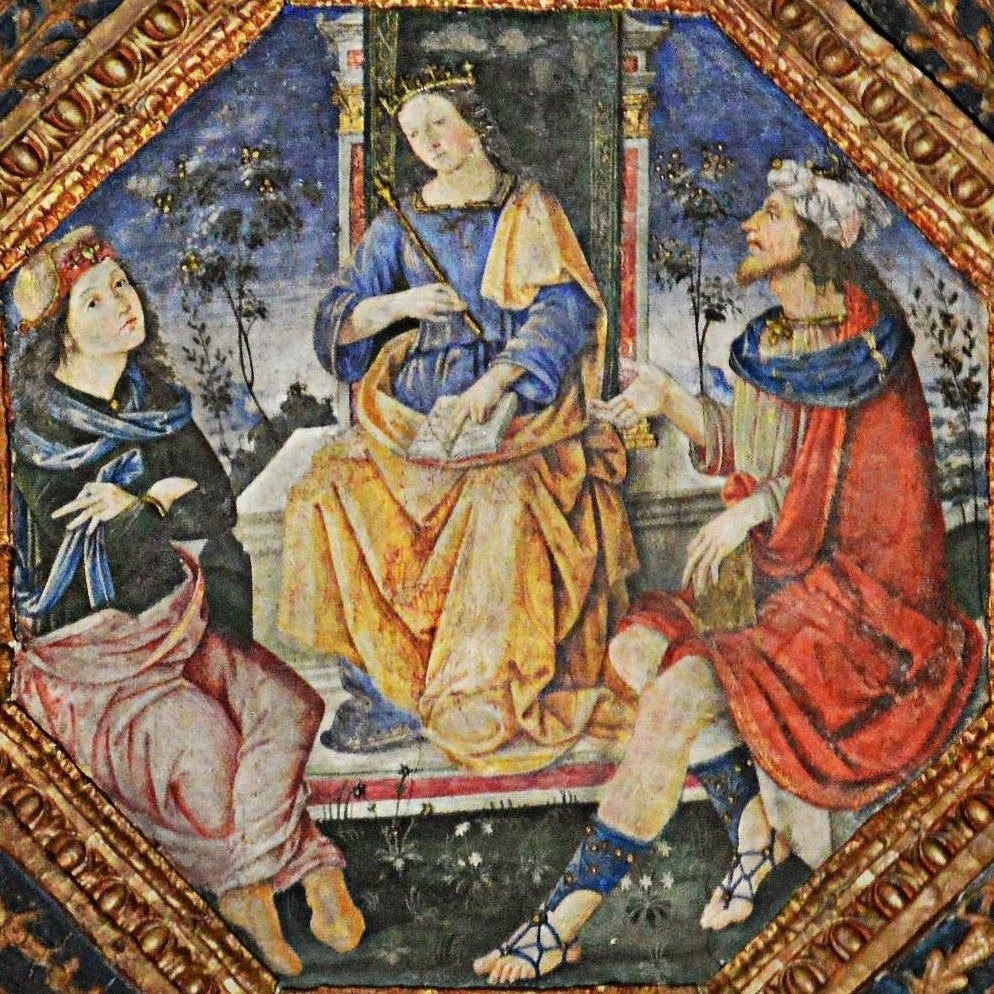
The Order’s archive gathers its historical material under three broad periods, each of which contributed something distinct to the ideas the Order holds.
The first is the ancient inheritance: the religion of Egypt, in which Ptah was said to create by conceiving in the heart and speaking with the tongue, in which images of the gods were made to breathe through the Opening of the Mouth, and in which the Ankh signified life itself. From the meeting of Egyptian and Greek thought came the figure of Hermes Trismegistus and the writings attributed to him, above all the Corpus Hermeticum and the Asclepius.
The second is the inheritance of late antiquity, centred on Alexandria. There, in the third and fourth centuries, philosophers, Christian theologians and the priests of the old temples argued about the nature of the divine and the manner of creation. The Council of Nicaea in 325 gave the Church a creed confessing God as maker of all things; the destruction of the Serapeum in 391 marked the end of the temple world. Hermetic writings were quoted by Christian authors, translated into Coptic and, at Nag Hammadi, buried in the desert.
The third is the inheritance of the Renaissance. When a Greek manuscript of the Hermetic treatises reached Florence around 1460, Cosimo de’ Medici asked Marsilio Ficino to translate it before Plato. Its ideas passed to Pico della Mirandola, who opened his Oration with the words of Hermes, and to Giordano Bruno, who carried them to their most daring conclusions. In the same decades Michelangelo gave visible form to the creation of humanity on the ceiling of the Sistine Chapel.
These periods are the ground from which the Order’s convictions grew, and the archive returns to them often. How the inheritance passed from each age to the next, and on into the age of Blake, is told in The Golden Chain.