
The Patronage of Hermes
Hermes Trismegistus as patron of the Order
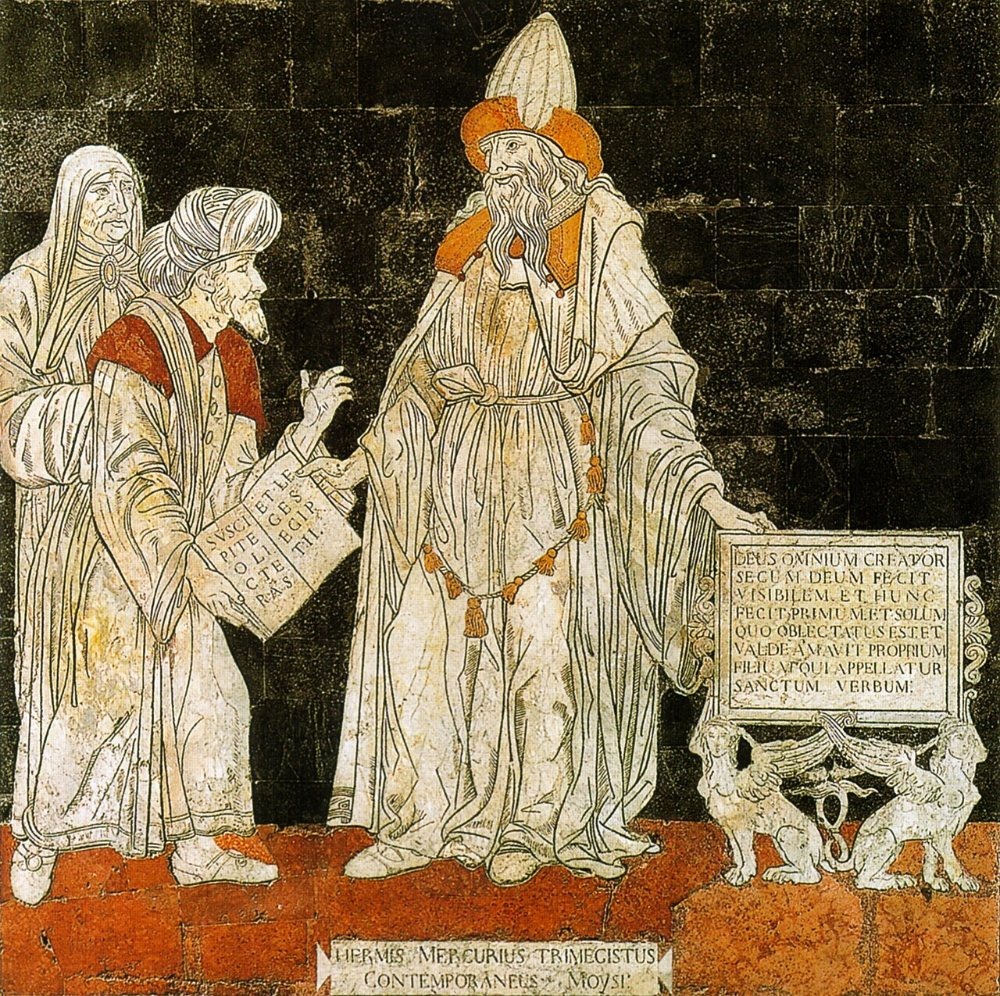
Hermes Trismegistus is the patron of the Apotheotic Order and the figure most often seen in its imagery. He is honoured for teachings that place the act of making at the heart of humanity’s kinship with the divine.
A patron, in the Order’s usage, is a figure whose teaching gives a fellowship its bearing. For the Apotheotic Order that figure is Hermes Trismegistus, the Thrice-Great, in whose name the ancient world gathered its most searching writings on the divine, the cosmos and the human mind.
What the Order honours is the vision of humanity those writings contain. In the Poimandres, the first human being, having beheld the work of the divine craftsman, wishes to make something as well. In the Asclepius, Hermes tells his pupil that humanity is a great miracle, a being that shares in the divine and, like its Creator, makes gods of its own in the images it fashions. Few bodies of ancient teaching place the act of making so near the centre of what it means to be human. The same writings hold that nothing in the world is ever destroyed, only changed; see Nothing Perishes.
Within the Apotheotic Order these passages are read as an ancient statement of its own conviction: that the creative mind is sacred, and that through its works humanity approaches the divine. It receives them as an inheritance, and studies them as philosophy.
Hermes also stands where several traditions meet, which suits a fellowship open to those of differing beliefs. He began as the Egyptian Thoth, god of writing and wisdom, seen through Greek eyes. Early Christian writers such as Lactantius quoted him with respect, while Augustine argued against him. Renaissance Italy called him a contemporary of Moses, and the cathedral of Siena set his figure into its floor. He belongs wholly to no single religion and has been claimed by many.
For these reasons his image presides over the Order’s entrance and archive. Those who pass beneath it enter a conversation far older than themselves.