On the Making of Gods
The Order’s reading of the Asclepius
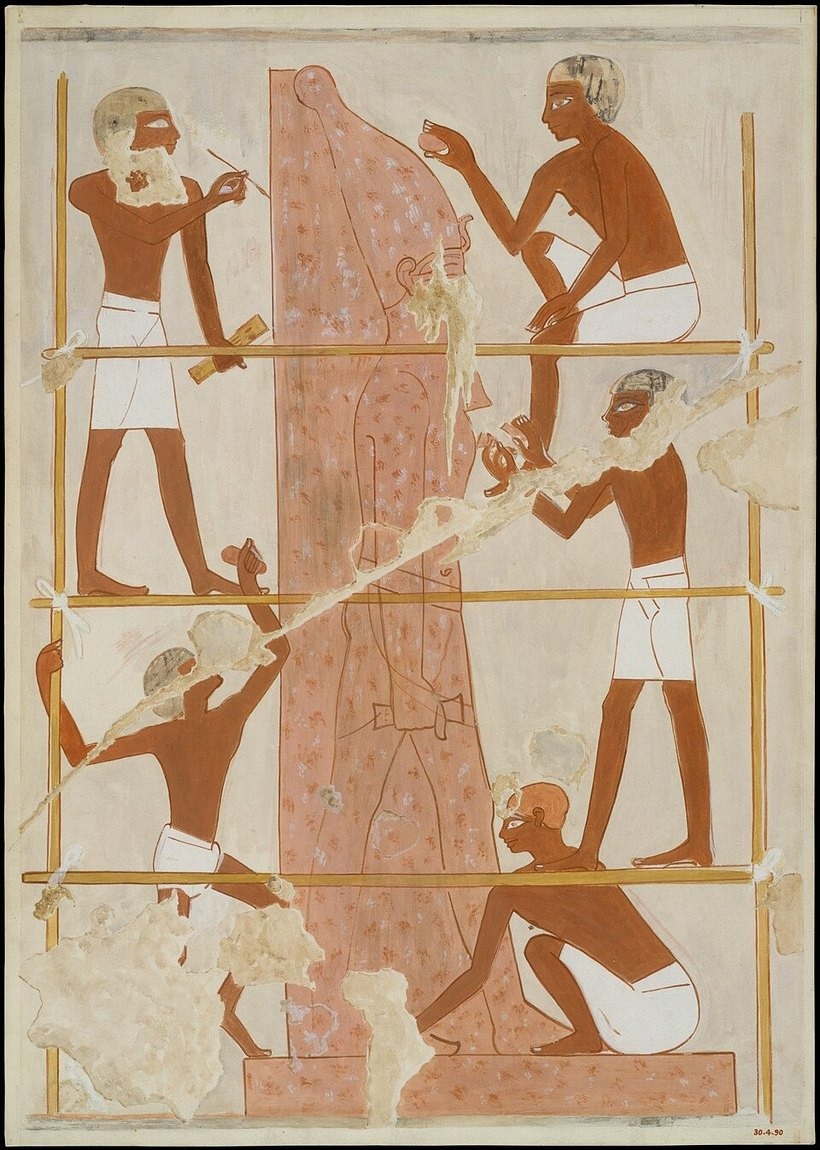
“As the Lord and Father made the gods of heaven eternal, in his own likeness, so humanity fashions its own gods after the likeness of its own countenance.”
Asclepius 23, paraphrased from the Latin
The Hermetic Asclepius contains a passage the Apotheotic Order regards as having no close parallel in ancient philosophy: the claim that human beings, like their Creator, make gods.
In the dialogue, Hermes explains to his pupil that there are two kinds of gods: those made by the supreme God, and those made by human beings. By the second he means the statues of the temples, which, when properly consecrated with hymns, offerings and rites, were believed to receive a divine presence able to heal, foretell and act. The passage reflects real Egyptian practice, in which a crafted image was made living through rituals such as the Opening of the Mouth.
The teaching troubled later readers. Augustine of Hippo quoted it at length in the City of God in order to refute it, and Renaissance translators handled it with care.
Christian thought came in time to its own view of made images. When the icons of Byzantium were attacked in the eighth century, John of Damascus defended them: an icon is not a god, but the honour given to it passes to the one it shows.
The Order reads the passage more broadly. Whatever one believes about the gods themselves, it is evident that human beings have given them faces, names, stories and dwelling places; that sculptors and poets have made them present to generations who would otherwise never have imagined them; and that the characters of fiction and the worlds of myth acquire, in the lives of those who encounter them, a kind of life. The Order holds this capacity to be a wonder of the human mind.
The Order names this capacity the Poetic Genius and affirms it in every tradition. Its source is left to individual conviction: one may understand humanity’s images of the divine as reflections of a God who precedes them and makes itself known through them; another may find their source in the depths of the mind, or leave it unknown. The Order asks that the power be recognised and used with the seriousness it deserves. See also the First and Second Breath.