John of Damascus and the Holy Images
The defence of icons
“I do not worship matter; I worship the Creator of matter, who became matter for my sake.”
John of Damascus, On the Divine Images I.16, translated from the Greek
John of Damascus was a Christian monk and theologian who, when the holy images of Byzantium were attacked, gave the most lasting defence of the made image as a bearer of the sacred.
He was born in Damascus around 675 into a Christian family that served the Umayyad caliphs as financial officials, and he worked for a time at their court. In later life he became a monk at the monastery of Mar Saba in the desert near Jerusalem, where he wrote on theology, philosophy and hymnody.
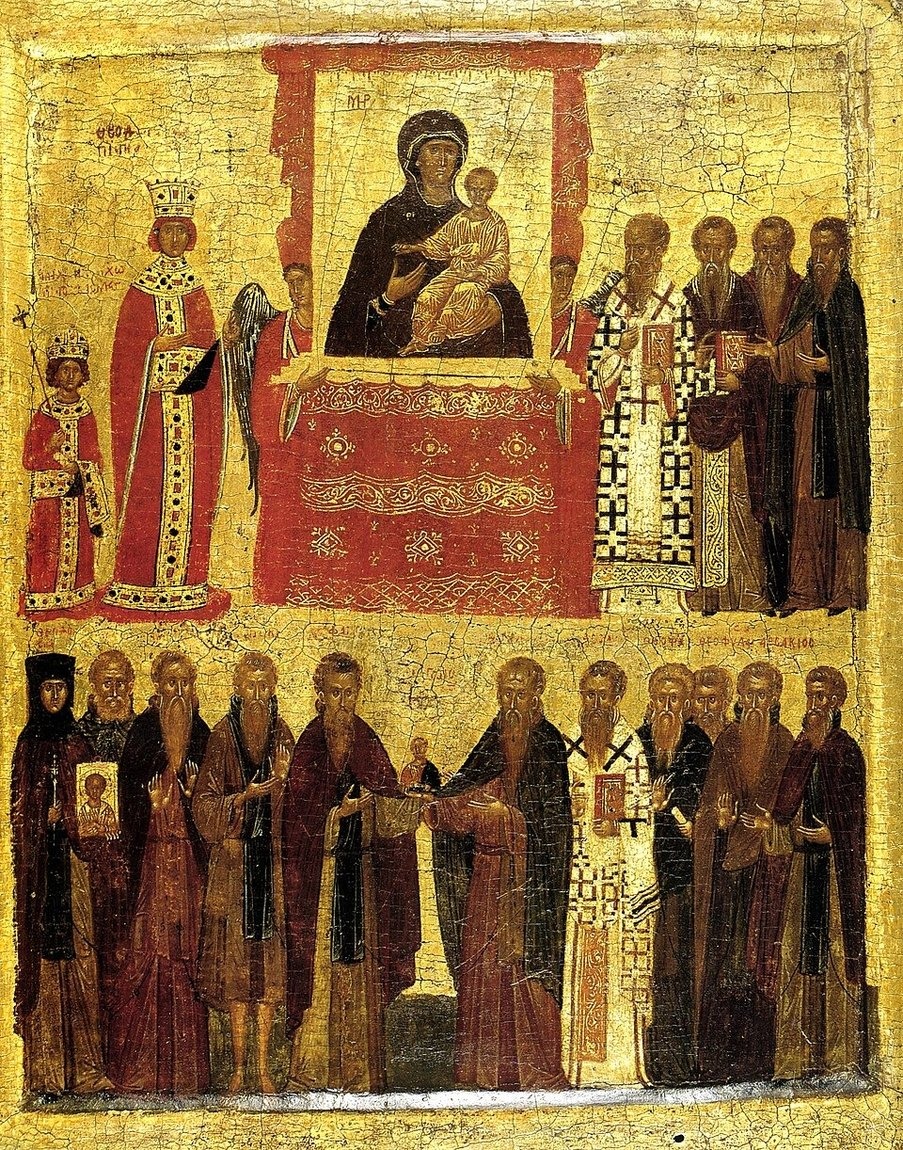
In the 720s the Byzantine emperor Leo III turned against the veneration of icons, and images of Christ and the saints were removed and destroyed. John, living under the caliphate and beyond the emperor’s reach, answered in three treatises on the divine images. The invisible God cannot be pictured, he argued; but God had become visible in Christ, and what has been seen may be shown. Worship belongs to God alone; the honour given to an image passes on to the one it shows.
The struggle over images lasted more than a century. A second council at Nicaea restored the icons in 787, and after a renewed attack they were restored for good in 843, a day still kept in the Orthodox churches as the Triumph of Orthodoxy. Seven centuries later, in the Latin West, Nicholas of Cusa sent the monks of Tegernsee a painted face whose gaze seemed to follow each of them, as a lesson in how God sees.
His teaching is his tradition’s own, and differs from the ensouled statues of the Asclepius: an icon is not a god, but a window. The Order holds it in particular regard as a defence of making itself: that paint and wood, shaped by human hands, may become a way into the presence of what is held sacred; see On the Making of Gods and Begotten, Not Made.