The Golden Chain
How the inheritance was handed on
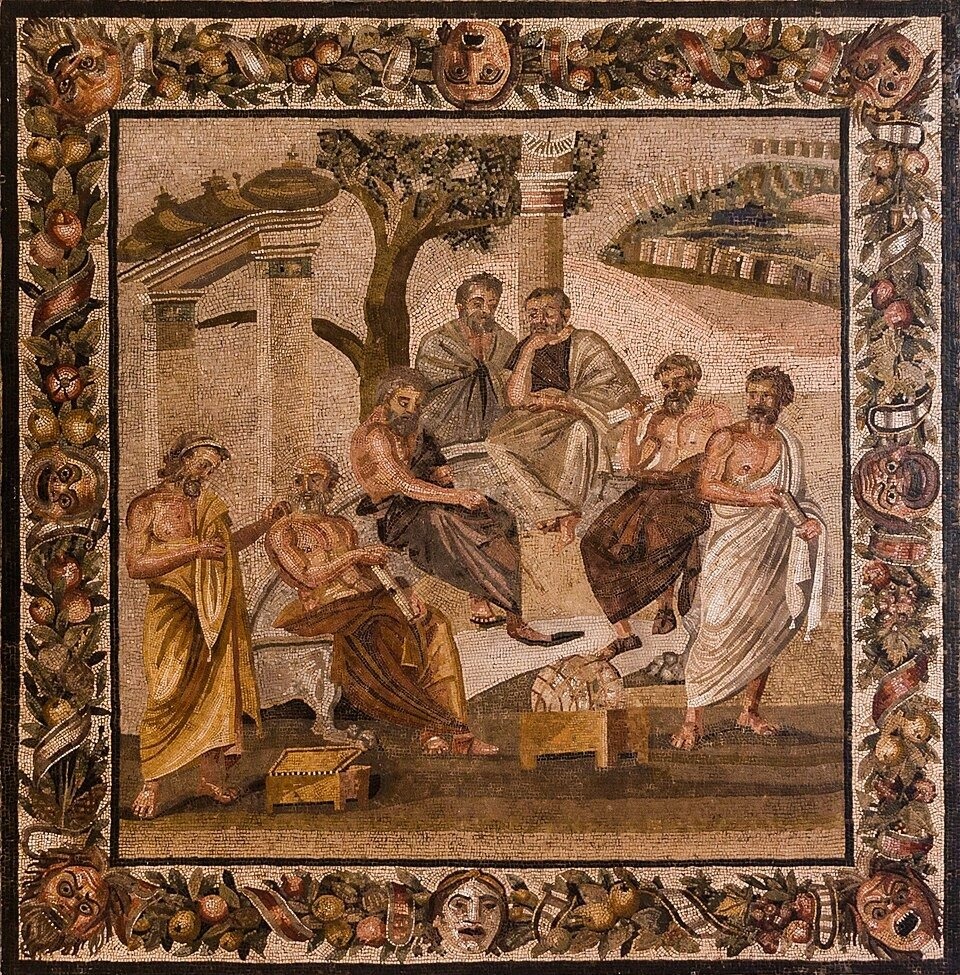
The Order’s inheritance did not travel by itself. It was handed on, from teacher to pupil and from translator to reader, across more than two thousand years. The old Platonists had a name for such a line: the golden chain.
The image comes from Homer. In the eighth book of the Iliad, Zeus boasts that if all the gods hung upon a golden chain let down from heaven, they could not drag him down, while he could draw up earth and sea together. The late Platonists took the chain for the succession of teachers through whom the wisdom of Plato had come down to them, each link holding the next.
Marsilio Ficino drew a longer chain. In the preface to his translation of the Corpus Hermeticum he traced a single wisdom from Hermes Trismegistus to Orpheus, from Orpheus through Aglaophamus to Pythagoras, who was said to hear the music of the spheres, and from Pythagoras through Philolaus to Plato. He meant it as history. Isaac Casaubon later showed that the Hermetic writings could not stand at its head, but by then the chain had done its work. It bound Hermes, Plato and Plotinus together in the minds of Renaissance readers, and through Pico della Mirandola and many others carried them into the wider world.
The chain reached England by the hand of a translator. Thomas Taylor, called the Platonist, a London bank clerk who taught himself Greek, spent his life putting Plato, Plotinus, Proclus and the Orphic hymns into English. His first Plotinus, published in 1787, was the treatise On Beauty, in which the reader is told to work on his own statue until the godlike splendour shines out. The learned mocked Taylor, but the poets read him. The scholar Kathleen Raine argued that William Blake drew deeply on his translations.
Samuel Taylor Coleridge met the same inheritance as a schoolboy. Charles Lamb remembered him in the cloisters of Christ’s Hospital, unfolding the mysteries of Iamblichus and Plotinus while passers-by stood still to listen. His later account of the imagination as a repetition, in the finite mind, of the eternal act of creation stands at the far end of that long line.
The chain had other strands. In 1657 the Mughal prince Dara Shikoh had the Upanishads put into Persian; a century and a half later they reached Paris, and in 1801 appeared in Latin. Arthur Schopenhauer read them, and across the Atlantic Ralph Waldo Emerson, who also read Taylor’s Plato, read the Bhagavad Gita beside them. At the far end of the chain, East and West were already reading one another.
The Order reads the chain as a conversation handed on. Each link received what came to it and gave it new form: Ficino read Hermes as a Christian, Blake read Plotinus as a prophet, and each changed what he passed along. What comes down the chain is a way of thinking about the mind, the divine and the act of making, and it is carried further whenever someone takes up an old book and makes something new of it; see The Three Inheritances and Those Who Preserve.