William Blake
The maker of a mythology
“I must Create a System, or be enslav’d by another Man’s.”
William Blake, Jerusalem, plate 10
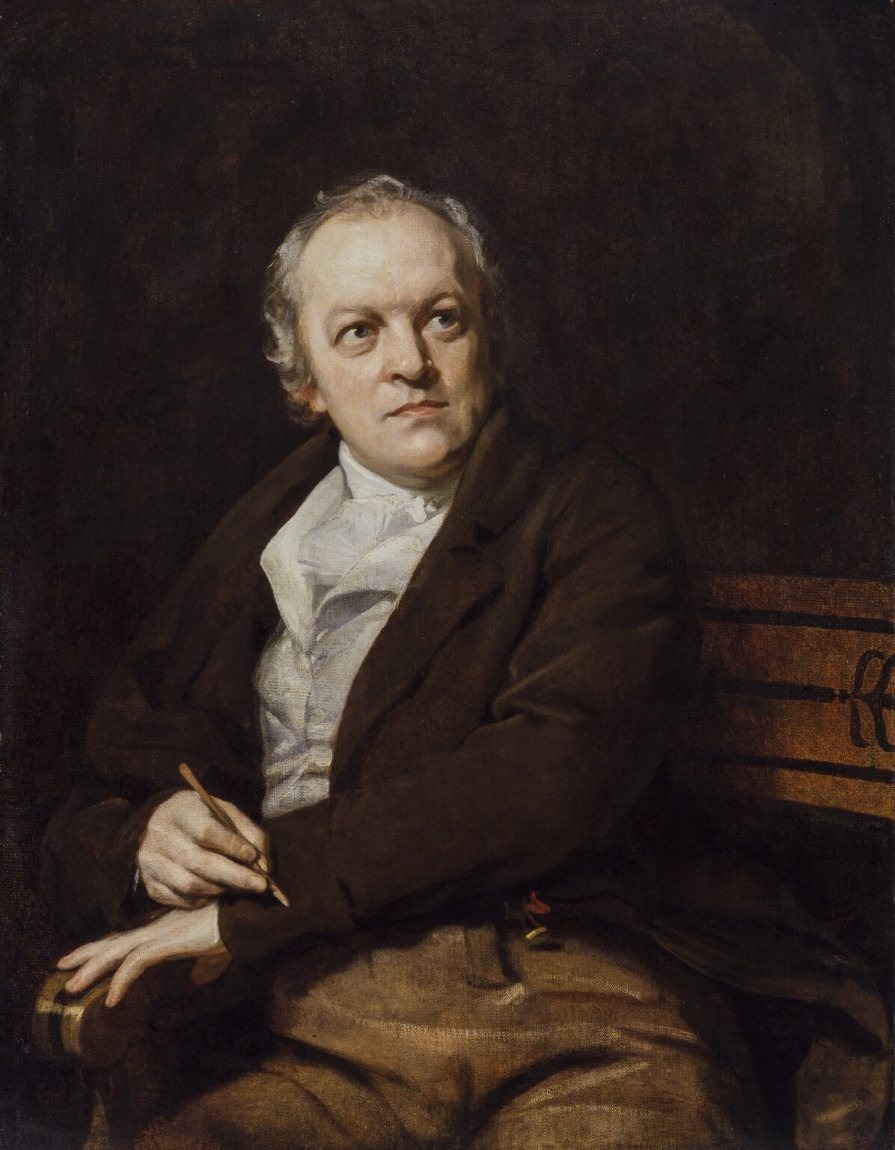
William Blake was an English poet, painter and printmaker who created, almost single-handed, one of the most complete original mythologies in European literature.
Blake was born in London in 1757, the son of a hosier, and apprenticed as a young man to the engraver James Basire. He earned his living as an engraver throughout his life, and in about 1788 devised his own method of relief etching, which allowed him to print text and image together on the same copper plate. His books, coloured by hand with the help of his wife Catherine, were made in tiny numbers.
Songs of Innocence (1789) and Songs of Experience (1794) are his best known works. Around them grew a series of prophetic books, among them America, Europe, The Four Zoas, Milton and Jerusalem, populated by beings of his own invention: Urizen, the tyrant of reason who measures and binds the world; Los, the blacksmith of imagination; Orc, the spirit of revolt; Enitharmon, the emanation of Los.
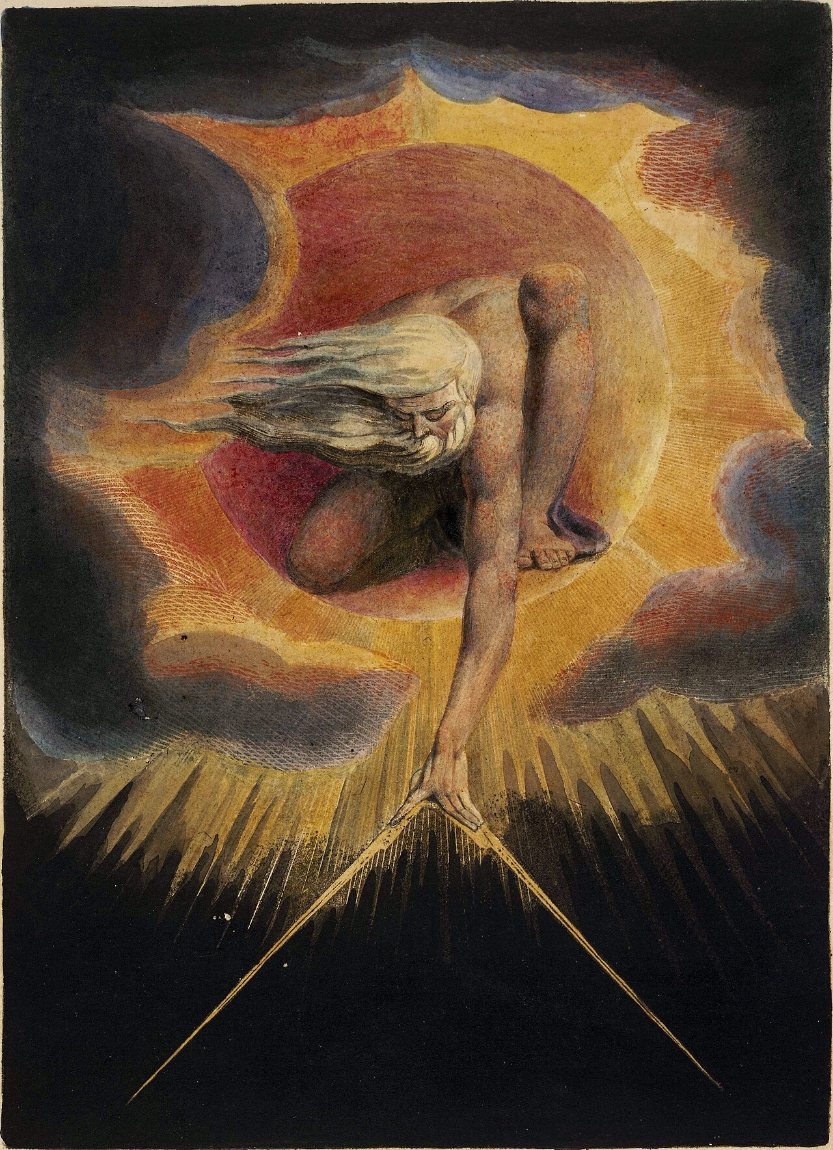
The Ancient of Days, the frontispiece to Europe, shows Urizen leaning from the sun to mark out the world with a pair of compasses, an image drawn from Proverbs and from medieval pictures of God the Geometer. Blake is said to have kept it among his favourite works, and to have coloured a copy of it in the last days of his life.
For Blake, imagination was not an ornament of life but its divine centre, and Los labours at his forge to build the city of art against every system that would bind the mind. Few makers have lived by the creative faculty so completely. He died in poverty in 1827, singing, by the accounts of those present.
Blake’s London was also the London of Thomas Taylor, whose English versions of Plato and Plotinus brought the old Platonist inheritance to readers without Greek. Kathleen Raine and others have traced its images through Blake’s work, and the Order counts him a link in the Golden Chain.
Two of his works stand in the Order’s Canon: his early etched book All Religions are One, from which the Order takes the name Poetic Genius, and his last engraving, the Laocoön.