
On the Nature of Temples
Places set apart
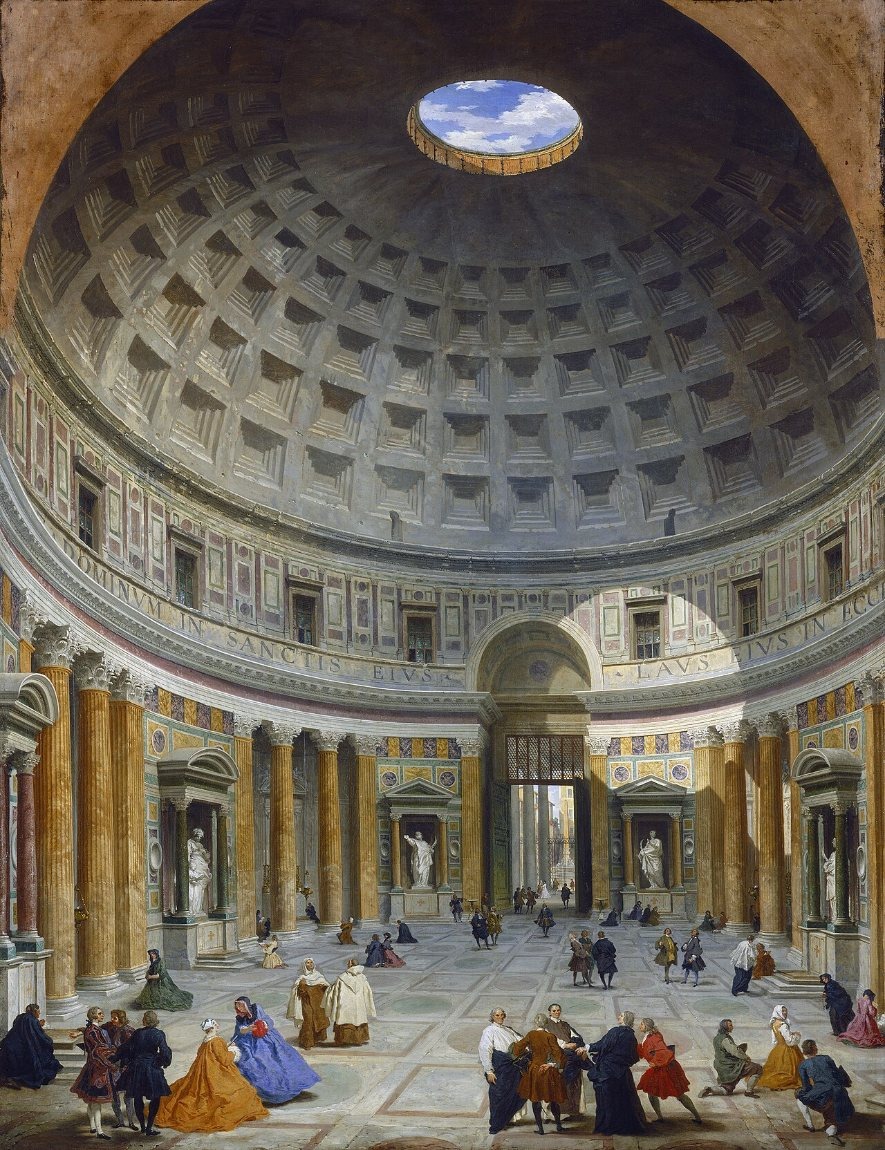
A temple is a place set apart for the contemplation, expression or preservation of that which is held sacred. Through architecture, symbols, ceremonies and tradition, a community gives form to its understanding of the divine and to the meanings by which it inhabits the world.
The words themselves remember this setting apart. The Latin templum first meant a space marked out by an augur, in the sky or on the ground, within which signs could be read. The Greek temenos, the sacred precinct around a shrine, comes from a verb meaning “to cut.” The Egyptians called a temple the mansion of the god: a house in which the divine image dwelt and was served each day. Other traditions name their sacred places differently, as church, mosque, synagogue, mandir or vihara, and understand them in their own ways. The Order uses the word temple broadly, as a name for all of them.
The Apotheotic Order regards humanity’s faculty of creation as sacred. Whether that faculty proceeds from a Supreme Divine, arises from the nature of the universe, or has an origin beyond present understanding is left to individual conviction. The Order’s purpose does not depend on agreement on this question.
A member may therefore enter a temple with reverence without professing the faith to which it is dedicated. They may honour the divine presence sought within its walls; the sacred story the temple exists to tell; the devotion and creative labour through which generations have raised and sustained it; or all of these at once. A cathedral may be sacred to one visitor because God is believed to be present there, to another because of the story told in its windows, its altarpieces and its liturgy, and to a third for every one of these reasons. Each may stand in it reverently without asking the others to agree. The great cathedrals of Europe, raised by makers whose names are almost all lost, are among the fullest expressions of that labour; see The Cathedral Builders.
The story deserves particular mention. At the heart of nearly every temple is a sacred narrative: the birth, death and rising of Christ; the deliverance from Egypt and the giving of the Law at Sinai; the revelation of the Qur’an; the awakening of the Buddha beneath the Bodhi tree; the deeds of the gods of Egypt and of Greece. To those who hold such a story true, it is sacred as revelation. The Order holds it sacred too, whatever a member believes about its events, for it has shaped how humanity understands itself, its suffering and its hope, and has given meaning to countless lives. A member who does not share the faith may still stand before the Passion, told in stone and glass and music, and know that they are in the presence of something sacred. For the Order, that sacredness does not wait on agreement about history; see On Meaning and Historical Truth.
The history of the Pantheon in Rome shows how long such devotion can last. Rebuilt under the emperor Hadrian in the early second century as a temple to the gods, it was consecrated as a Christian church in 609 and has been in use for worship ever since. Its dome, open to the sky at its centre, has drawn the eyes of worshippers and visitors for nearly nineteen hundred years.
Among the sanctuaries of the world, the Order holds the Cathedral of Siena in particular regard. Set into the marble pavement near its entrance is a figure of Hermes Trismegistus, the Order’s patron, placed there in 1488 among the sibyls of the pavement as a teacher offering a book to the Egyptians. The cathedral is honoured for its own faith and art, and for having given the patron a place at its threshold; see The Hermes of Siena.
Nor is reverence confined to places of worship. A library may be approached as a temple to knowledge, an archive as a sanctuary of memory, and a gallery as a place devoted to the works of the imagination; see Temples of Knowledge. And to honour such places is also to respect those who keep them; see In the Sanctuaries of Others. The Order regards their care and preservation as an expression of its commitment to the sacred faculty of creation.