
The Cathedral Builders
Abbot Suger and the nameless masons
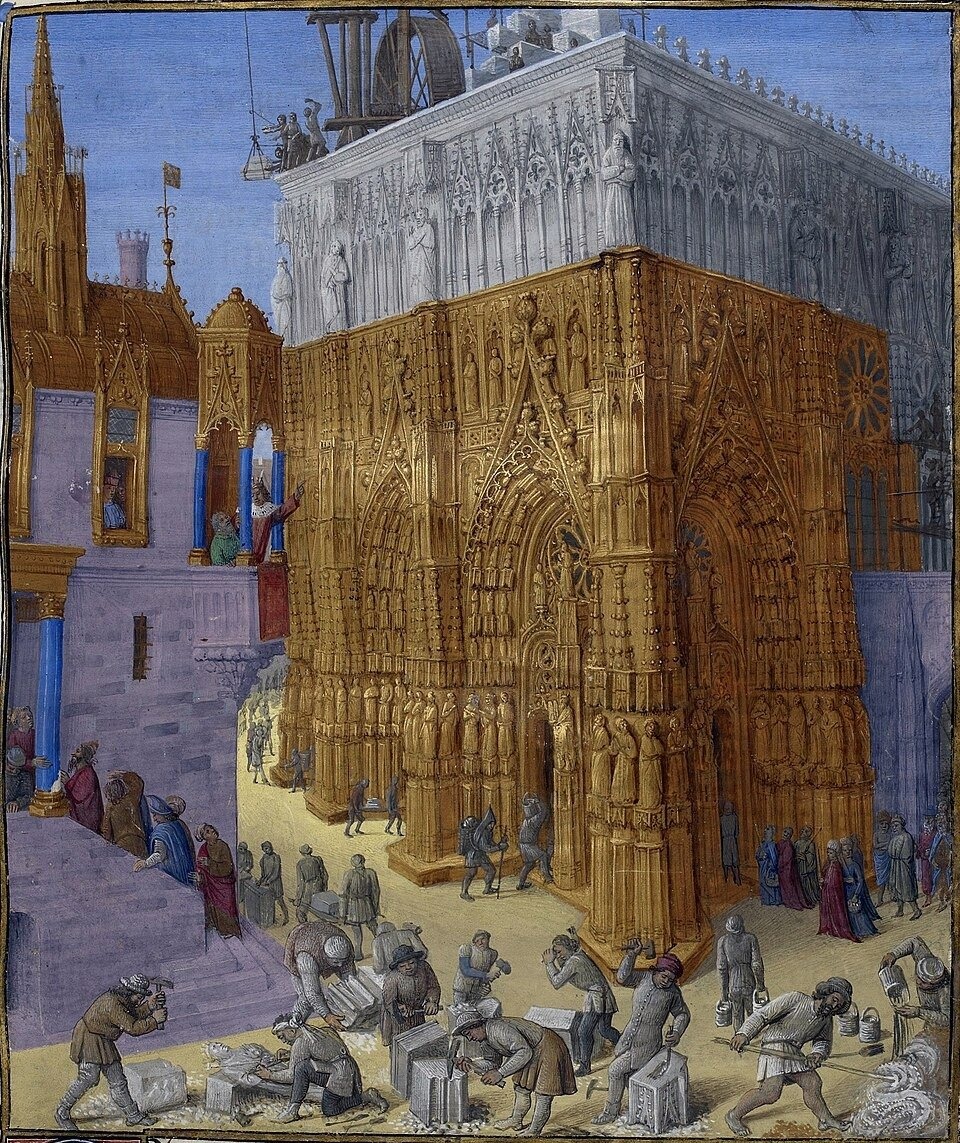
“The dull mind rises to truth through material things.”
Inscription on the doors of Saint-Denis, composed by Abbot Suger, translated from the Latin
The great cathedrals of medieval Europe are among the largest works of human making ever undertaken in devotion, and most of those who made them left no names.
In the 1130s Suger, abbot of Saint-Denis near Paris, began to rebuild the old abbey church where the kings of France were buried. He wanted it filled with light. The new choir, consecrated in 1144, opened its walls into a ring of chapels so that, as he wrote, the whole church would shine with a wonderful and uninterrupted light. It is often counted as the first building of the Gothic style.
Suger explained what he meant in verses set upon the gilded doors. Those who admired the doors should look not at the gold and the cost but at the work, which shines so that it may lead minds, through true lights, to the True Light. The dull mind, he wrote, rises to truth through material things. Behind his words lay the writings then ascribed to Dionysius, the patron of his abbey, which taught that all things are lights that lead the soul back toward the source of light, a Christian thought shaped by the late Platonists; see The Golden Chain.
The builders who followed him are mostly unknown. At Chartres, when a new tower was raised in 1145, a chronicler told of lords and commoners alike harnessing themselves to carts to haul the stone; after the fire of 1194 the cathedral was rebuilt within a few decades by masons, carpenters and glaziers whose names are nearly all lost. Only now and then does one appear, like Villard de Honnecourt, whose sketchbook of the thirteenth century still survives.
The Order holds the cathedrals in reverence first as places of worship, raised for the faith of those who built them; see On the Nature of Temples. It honours in them also the thought Suger set upon his doors, that made things may lift the mind toward what is highest, and the nameless makers whose work outlived every trace of their lives; see Those Who Preserve.