
Temples of Knowledge
Libraries, archives, museums and theatres
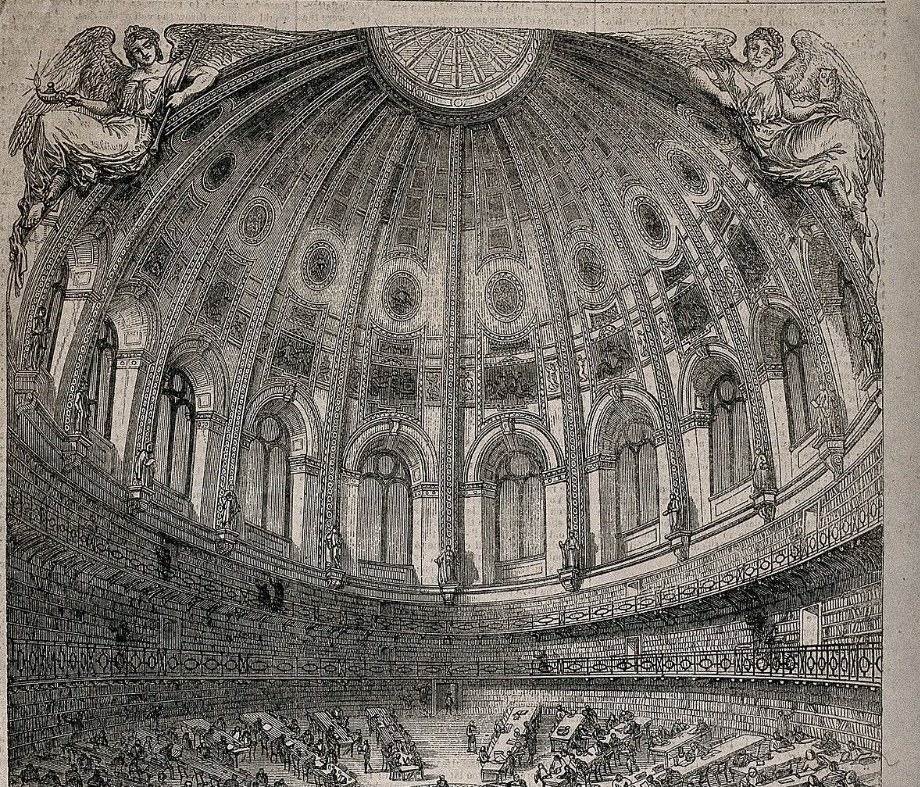
The Order holds that places devoted to knowledge, creation and memory may be approached with a reverence usually reserved for temples.
The connection is ancient. The Museum of Alexandria, home of the great Library, was in name a Mouseion, a shrine of the Muses, the goddesses of poetry, history, music and learning; every museum since has borne their name. The Greek historian Diodorus records that an Egyptian royal library at Thebes bore above its entrance the words “healing place of the soul.” And the theatre of Athens stood within the sanctuary of Dionysus, where tragedies were first performed as part of his festival.
In India the Buddhist monastery of Nalanda, founded in the fifth century, became one of the great houses of learning of the ancient world, drawing students from as far as China and Korea; the Chinese pilgrim Xuanzang studied there in the seventh century. Its libraries were destroyed by invaders around 1200, and it is said that they burned for months. Like the Serapeum, it is remembered both for what it kept and for what was lost.
In the Order’s understanding, a library is a temple to knowledge and human memory, preserving the thoughts, stories and discoveries of minds across generations. An archive is a sanctuary of memory. A museum or gallery keeps the works of the imagination and invites their contemplation. Theatres, workshops and studios are places where new works are brought into being. Their significance lies not only in their walls and collections but in the practices they sustain and the meanings entrusted to them. In his prison in Naples Tommaso Campanella imagined a whole city built in this spirit, its seven walls painted with all that is known, and the masters of the art of memory built such temples within the mind itself.
Grandeur is not required. A small parish library, a craftsman’s workshop or an ordinary room made meaningful by years of shared practice may inspire as much reverence as a domed reading room. Nor does age alone make a place sacred; it is the meaning invested in it, and the care with which that meaning is kept, that matters.
The Order need not build temples of its own to find places worthy of reverence. Libraries, historic rooms and studios, entered with the permission of those who keep them, may serve it as well as any temple. To preserve a manuscript, a library or a historic site is, in the Order’s view, to safeguard not only an object but the meanings and labours people have entrusted to it; see To Create, To Preserve, To Uphold.