
Tommaso Campanella
The City of the Sun
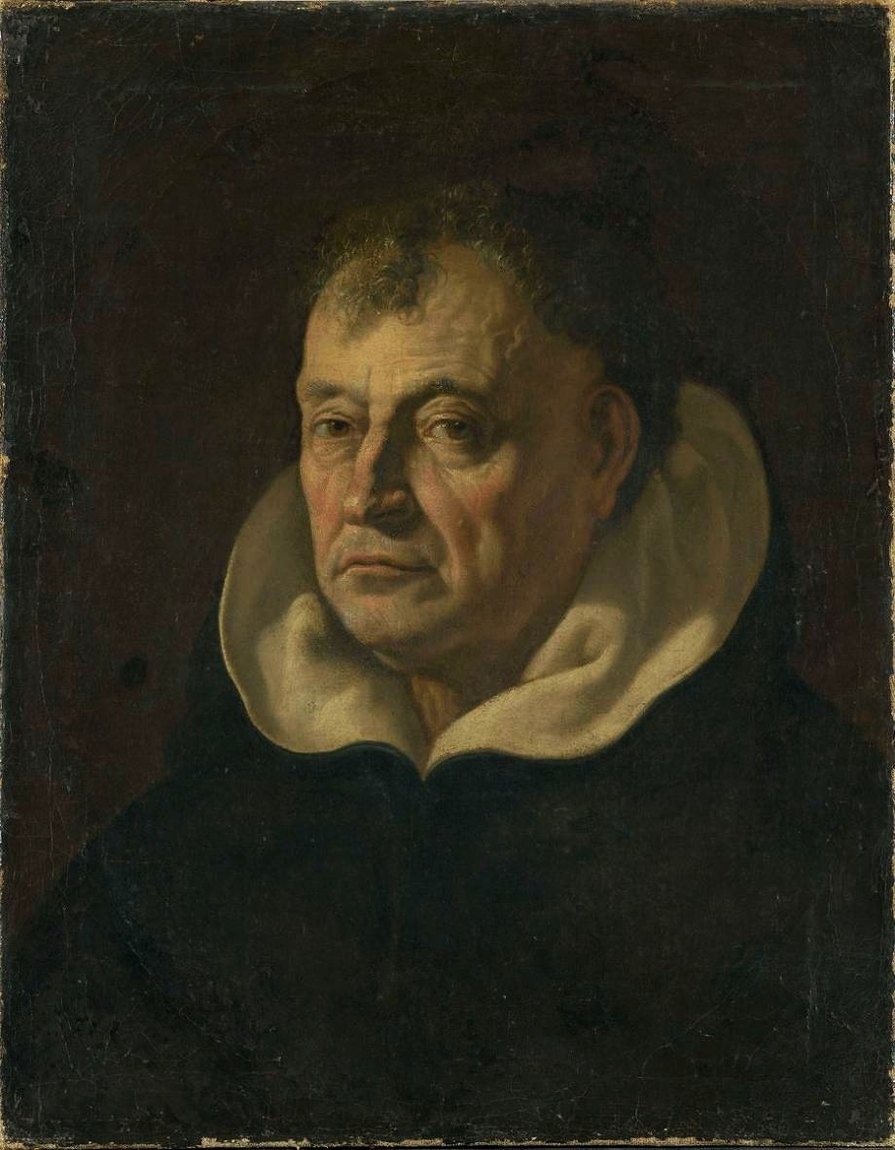
Tommaso Campanella was a Dominican friar, philosopher and poet from Calabria who spent twenty-seven years in prison, and there imagined a city whose walls taught all that was known.
He was born in 1568 at Stilo, in Calabria, the son of a poor shoemaker, and entered the Dominican order while still a boy. He read widely and against the grain of his teachers, and by his twenties had been tried more than once for heresy. In 1599, amid rumours of great changes to come with the new century, he was caught up in a conspiracy against Spanish rule in Calabria. He was arrested and tortured, and to escape execution he feigned madness, holding to it through a torture of some thirty-six hours without giving way. He was condemned to life imprisonment in Naples.
In prison he wrote without cease: philosophy, theology, poetry, and in 1602 a short dialogue, The City of the Sun, published in Latin at Frankfurt in 1623. It describes a city on a hill, ringed by seven walls named after the seven planets. The walls are painted inside and out with all knowledge: figures of mathematics, every kind of stone, plant and animal, the heavens, and the lawgivers and inventors of every nation. Children learn by walking the walls with their teachers. At the summit stands a round temple, its dome painted with the stars.
The historian Frances Yates saw in the city a descendant of Adocentyn, the city that a medieval book of magic says was built by Hermes, with images on its walls that kept its people wise and virtuous. Whatever its sources, it is one of the great images of a city as a book, and of learning as something to be lived in.
Campanella was released in 1626. He had written a defence of Galileo’s freedom to inquire from his cell in 1616. In Rome, in 1628, he performed for Pope Urban VIII rites of the kind Ficino had described, with lamps for the planets, music and scents, to turn aside the danger of an eclipse. In 1634 he fled to Paris, where Richelieu and Louis XIII protected him. When the future Louis XIV was born in 1638 he greeted him in a poem as a sun to come. He died in Paris the following year.
Campanella earned his place in this archive with a mind that went on making in the worst of conditions, and with his vision of a city in which knowledge is kept, displayed and handed on as a common inheritance; see Temples of Knowledge and The Art of Memory.