
The Art of Memory
Palaces and theatres of the mind
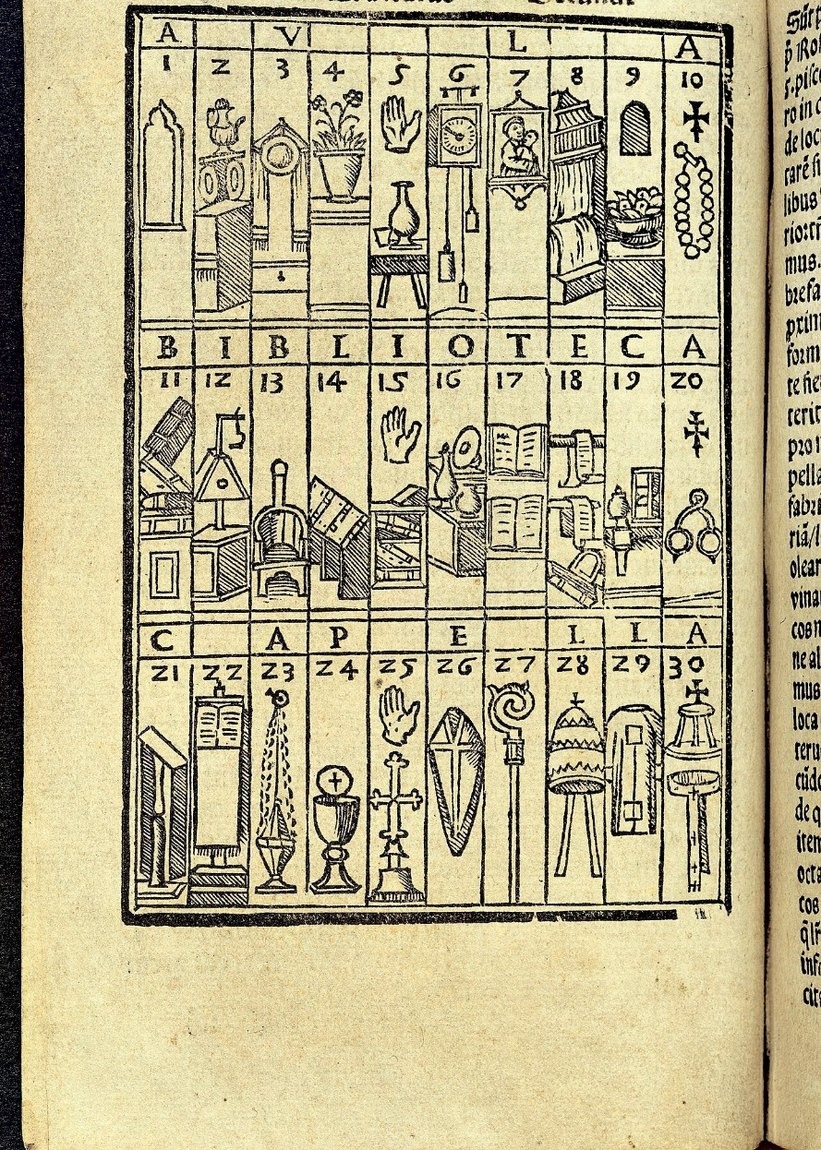
Before books were common, memory was a craft. For two thousand years orators, scholars and mystics trained themselves to build places in the imagination and to fill them with images, so that nothing entrusted to them would be lost.
Cicero tells how the art began. The poet Simonides of Ceos was dining in the house of a nobleman in Thessaly when he was called outside by two young men. While he was gone the roof fell in, crushing the other guests beyond recognition. Simonides named them all by remembering where each had sat, and so discovered that order and place are the keys to memory.
A Roman handbook of rhetoric, the Rhetorica ad Herennium, written in the early first century BC, sets out the method. The student chooses a series of places, loci, in a building he knows well, and sets in each an image, imago, standing for what is to be remembered. The images should be striking: beautiful or grotesque, crowned or bloodied, doing something. Walking through the building in the mind, the orator finds each thing where he left it. Through the Middle Ages the art was kept as part of the virtue of prudence, and monks and scholars used its methods to carry the scriptures, and much else, by heart.
In the Renaissance the art grew into something stranger. Giulio Camillo built a wooden theatre, large enough for two people to enter, in which all knowledge was to be arranged in images on seven rising tiers under the seven planets; a visitor who saw it in 1532 wrote to Erasmus that Camillo spoke of it as a mind and soul made into a building. Its plan, published in 1550 as L’Idea del Theatro, draws on the Hermetic writings. Giordano Bruno made memory the ground of his philosophy, and in The Shadows of Ideas of 1582 he set images on turning wheels to be combined without end.
The art travelled far. In 1596 the Jesuit Matteo Ricci wrote a treatise on memory in Chinese for the sons of a provincial governor preparing for the imperial examinations, and taught them to build a palace in the mind. Other peoples kept their inheritance without such buildings. The hymns of the Rigveda were handed down by mouth for thousands of years, recited in interlocking patterns, word by word and backwards and forwards, so that not a syllable would change; and the rune singers of Karelia whom Elias Lönnrot met held thousands of lines by heart.
The Order honours the art of memory as a meeting of its two first duties. To build a place of memory is to create in order to preserve; the palace in the mind is a temple of knowledge carried by one person. The Muses were the daughters of Memory, and those who practised this art knew why.