Elias Lönnrot
The gatherer of the Kalevala
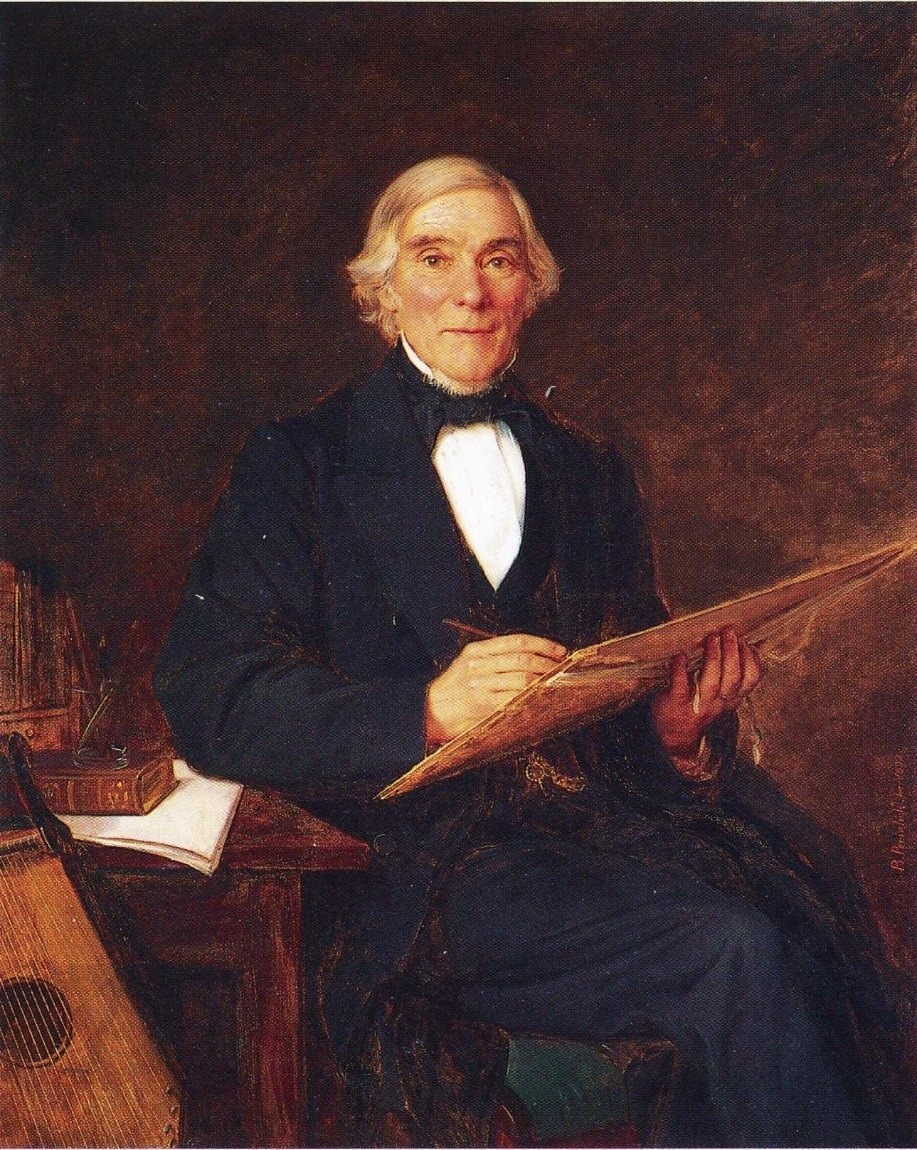
Elias Lönnrot was a Finnish country doctor who walked the villages of Karelia gathering the songs of rune singers, and shaped them into the Kalevala.
He was born in 1802 at Sammatti, the son of a village tailor, and studied medicine at the university of Turku and later Helsinki. From 1833 he served as district physician at Kajaani in the remote north-east, and from there he set out again and again on foot, by boat and by sledge into Finnish and Russian Karelia.
In the villages he met singers who still knew the old poems by heart, long runes sung in the trochaic metre of the tradition. From one singer, Arhippa Perttunen, he recorded thousands of lines in a few days. Lönnrot arranged what he gathered into a continuous epic, published as the Kalevala in 1835 and in a greatly enlarged edition of fifty poems in 1849, followed by the Kanteletar, a collection of lyric songs.
The Kalevala tells of the old sage Väinämöinen, of the smith Ilmarinen who forged the Sampo, a mill of plenty, and of the tragic Kullervo. It gave Finland a national epic and shaped its art and music, and it was among the works that set the young Tolkien on the road to his own mythology.
The Order honours Lönnrot as both a preserver and a maker: he saved a tradition that was passing from memory, and gave it the form in which it lives today; see Those Who Preserve.