Giordano Bruno
The infinite universe
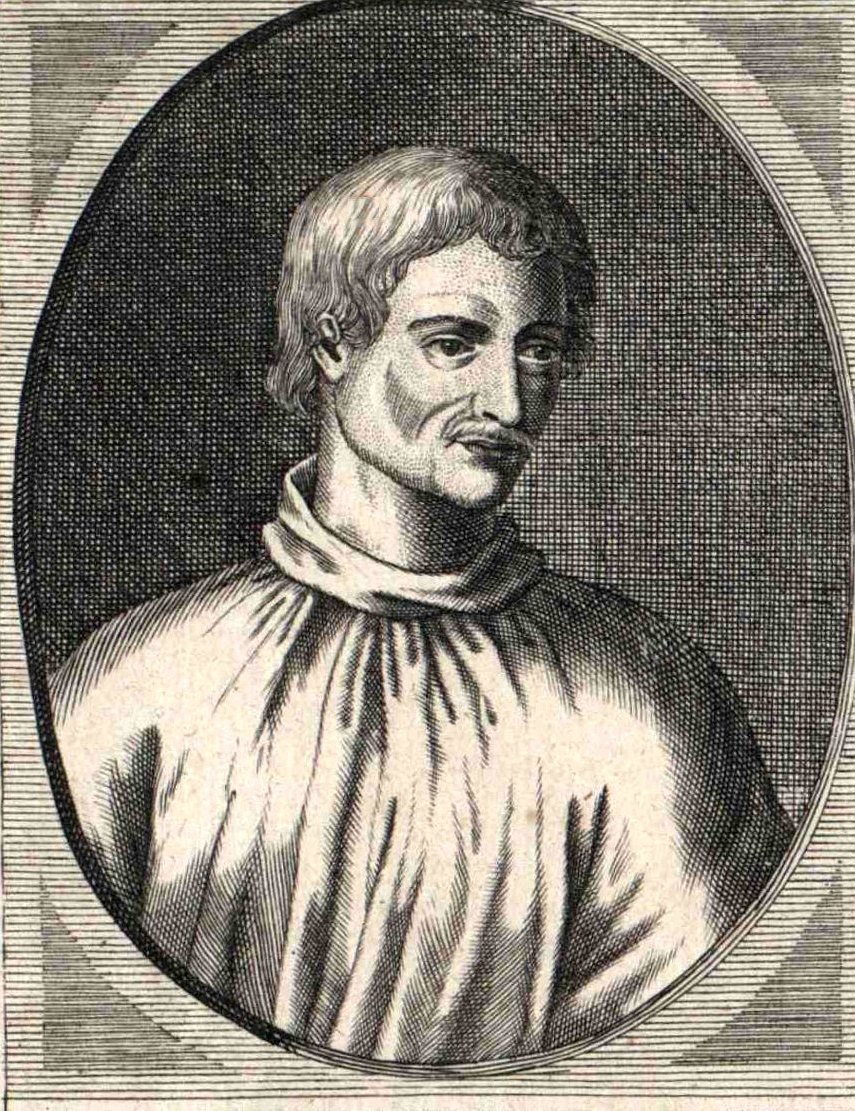
Giordano Bruno was an Italian philosopher, cosmologist and former Dominican friar, burned in Rome in 1600 for heresy after refusing to recant his views.
Bruno was born at Nola, near Naples, in 1548, and entered the Dominican order as a young man. Suspected of heresy, he left Italy in 1576 and spent the next fifteen years travelling: to Geneva, Toulouse and Paris, where he lectured before King Henry III; to London, where between 1583 and 1585 he wrote his Italian dialogues, including On the Infinite Universe and Worlds; and on to Wittenberg, Prague, Helmstedt and Frankfurt.
Bruno taught that the universe is infinite, that the stars are suns, and that innumerable worlds exist, all animated by a divine principle present throughout nature. Here he built on Nicholas of Cusa, whom he called “the divine Cusanus.” He also wrote extensively on the art of memory, the discipline of training the imagination to hold and arrange images. His writings draw on Hermetic sources, and the historian Frances Yates argued in 1964 that Hermeticism was central to his thought. Her thesis has been much debated; his debt to the Hermetic writings has not.
In 1591 Bruno accepted an invitation to Venice from the nobleman Giovanni Mocenigo, who denounced him to the Inquisition the following year. He was sent to Rome, imprisoned for seven years and tried. He refused to recant, and on 17 February 1600 he was burned alive in the Campo de’ Fiori, where a statue of him by Ettore Ferrari has stood since 1889. In a prison in Naples at the same time lay another Dominican of southern Italy, Tommaso Campanella.
The Order remembers Bruno for the daring of his imagination and for the price he paid for it. His death is a reminder that the freedom to think, and to give form to what one thinks, is part of what the Order exists to uphold.