Marsilio Ficino
Translator of Plato and of Hermes
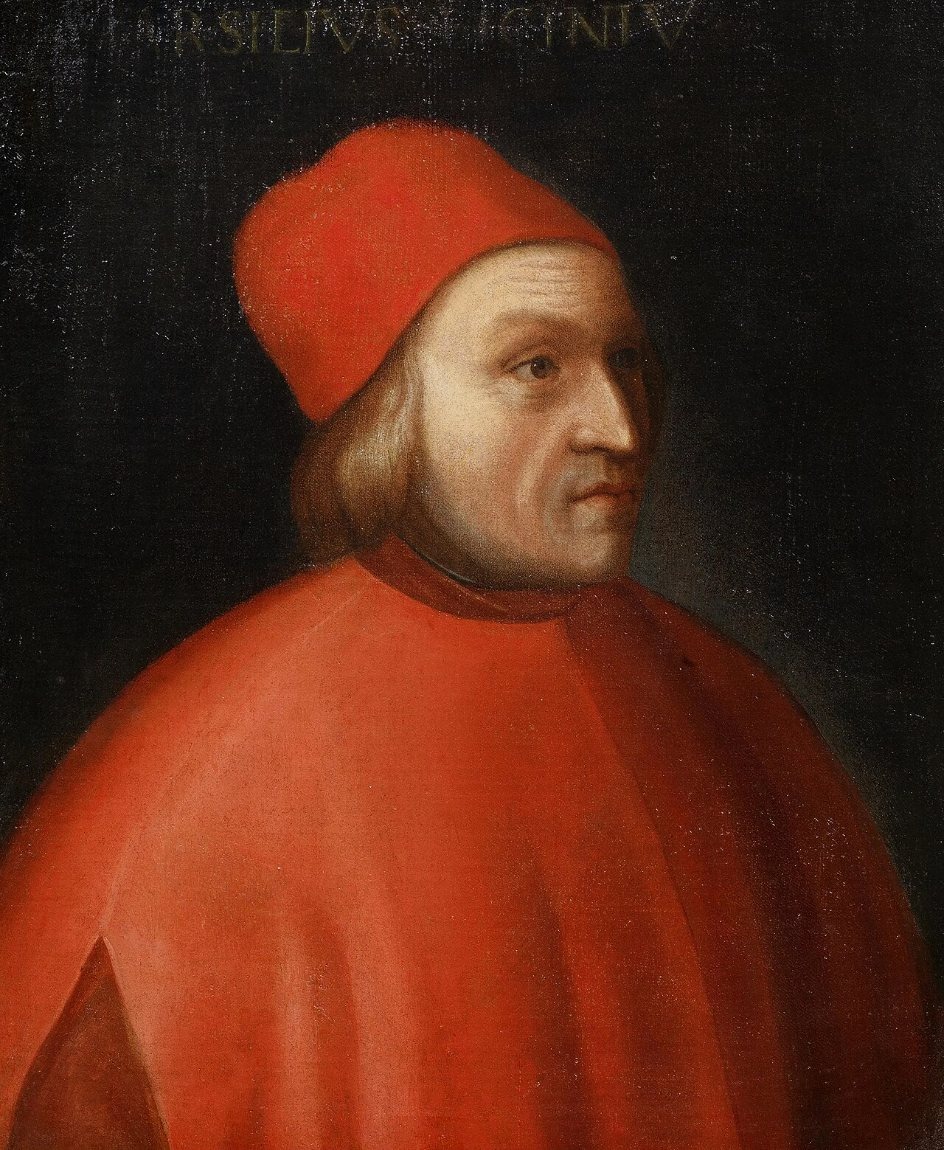
Marsilio Ficino was a Florentine philosopher, physician and priest, and the translator who restored Plato and Hermes Trismegistus to the Latin West.
Ficino was born in 1433 at Figline Valdarno, the son of a physician to the Medici. Cosimo de’ Medici became his lifelong patron, gave him a house near the Medici villa at Careggi, and set him to translate Plato. In 1463 he interrupted that work to translate the Corpus Hermeticum, published in 1471. His complete Latin Plato appeared in 1484 and his Plotinus in 1492. He was ordained a priest in 1473 and died at Careggi in 1499.
His own principal work, the Platonic Theology, completed in 1474, argues for the immortality of the soul. Among its arguments is one drawn from human making. Human beings, Ficino observes, imitate all the works of divine nature in their arts, govern animals, build cities and chart the heavens. A being capable of such works, he reasons, must possess a mind of almost divine power.
Ficino believed that a single ancient wisdom had passed from Hermes through Orpheus and Pythagoras to Plato, and that it was in harmony with Christianity. This idea of an ancient theology gave the Hermetic writings enormous prestige in the Renaissance. It was later undermined by the work of Isaac Casaubon. The Order traces that line, and the links that came after it, in The Golden Chain.
Ficino was also a musician. Friends remembered him singing the ancient Orphic hymns to the lyre, and in his Three Books on Life of 1489 he wrote of how song, images, scents and colours might draw down the life of the heavens to strengthen body and spirit. He called this natural magic and took care to keep it apart from any dealing with demons, and near the end of the work he turned, cautiously, to the passage of the Asclepius on the statues of the temples. It was the Hermetic art of making gods read as an art of harmony, and a century later Tommaso Campanella would practise it for a pope.
Around him at Careggi gathered the circle of friends and pupils later remembered as the Platonic Academy, who met to read Plato, to converse and to make music. The Order honours Ficino as the scholar through whose translations its patron’s teachings reached the modern world, and as a thinker who found in human creativity evidence of the soul’s divine nature.