
Cosimo de’ Medici and the Hermetic Manuscript
Hermes arrives in Florence
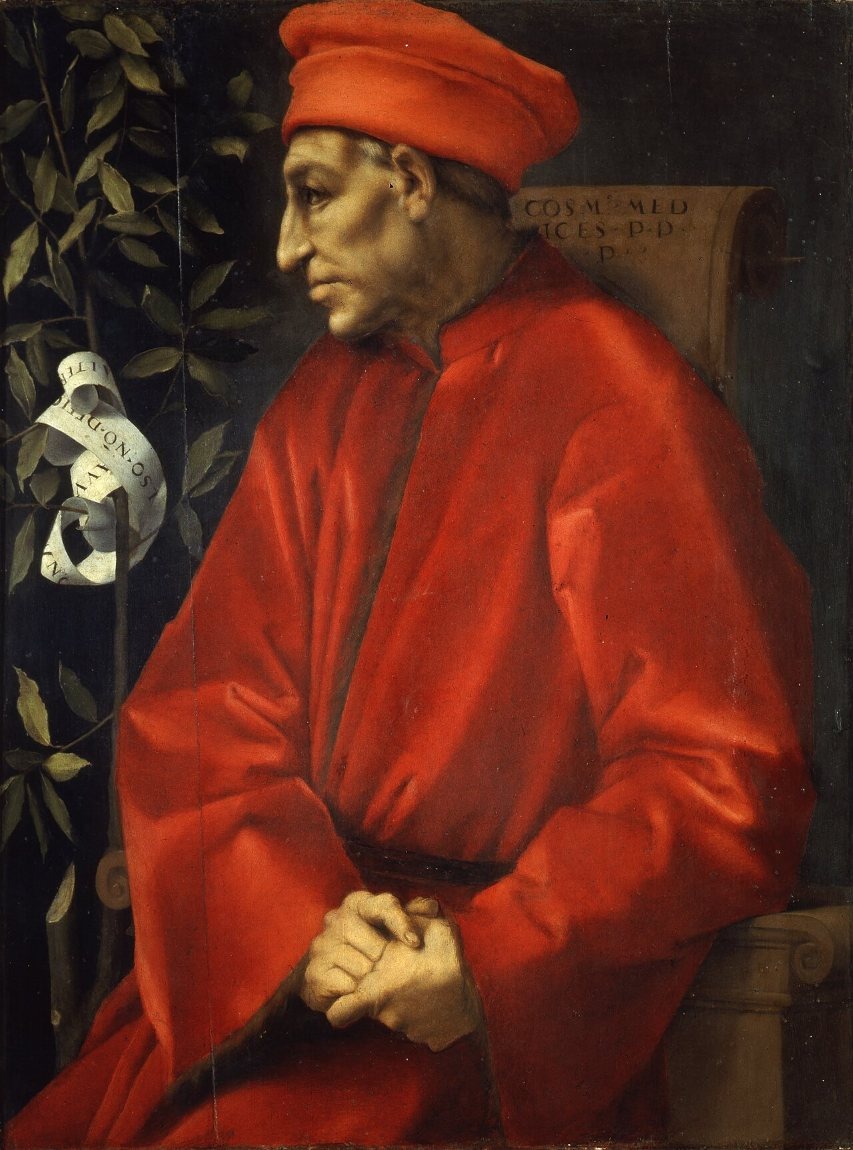
Around 1460 a Greek manuscript of the Hermetic treatises was brought to Florence and acquired for Cosimo de’ Medici, who had it translated before the dialogues of Plato.
Cosimo de’ Medici (1389–1464) was a banker and the effective ruler of the Florentine republic, and one of the great patrons of the early Renaissance. Among his agents was the monk Leonardo of Pistoia, who searched for Greek manuscripts in the former Byzantine world. One of the books he brought back contained most of the Corpus Hermeticum.
Cosimo had already entrusted the young Marsilio Ficino with translating the complete works of Plato. According to Ficino’s own later account, Cosimo asked him to set Plato aside and translate Hermes first. Ficino completed the work in 1463. Cosimo died the following year.
The priority made sense to its readers. Ficino and his contemporaries believed Hermes to be far older than Plato, one of a line of ancient theologians through whom a single wisdom had passed from Egypt to Greece. To read Hermes was, they thought, to read the source.
The Order regards this episode as the moment at which its patron re-entered European thought. A dying man’s wish to read an ancient book before his death set in motion one of the most consequential translations of the Renaissance. His grandson Lorenzo would carry the family’s patronage of learning further still.