Plato
The philosopher of forms
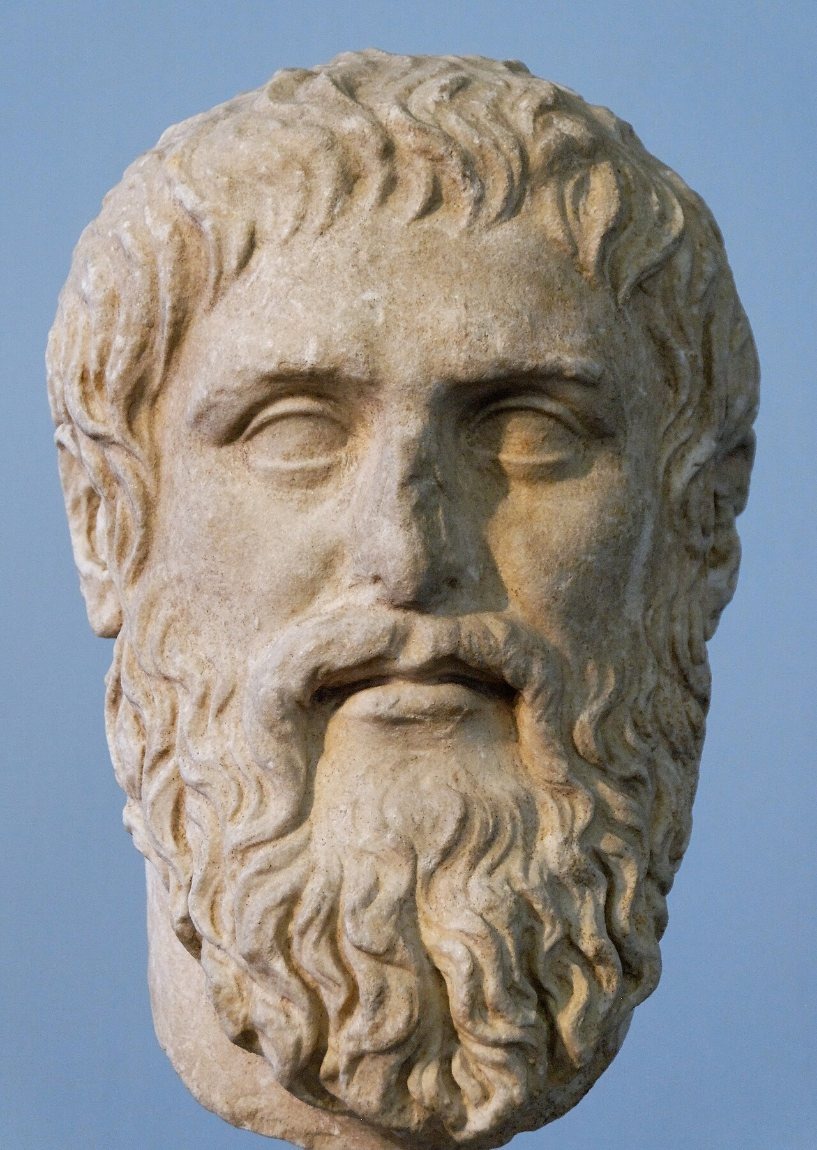
Plato was an Athenian philosopher, the pupil of Socrates and the founder of the Academy, whose dialogues have shaped Western thought on truth, beauty, the soul and the divine for more than two thousand years.
Plato was born into an aristocratic Athenian family around 427 BC. The trial and execution of Socrates in 399 turned him from politics to philosophy, and around 387 he founded the Academy in a grove outside the city, where students gathered for nearly three centuries.
His writings take the form of dialogues, most with Socrates as the chief speaker. In the Republic, prisoners in a cave mistake shadows for reality. In the Symposium, the soul climbs a ladder of love from beautiful bodies to Beauty itself. In the Timaeus, a divine craftsman fashions the ordered world by looking to an eternal model, an image of creation as a work of art that the Hermetic writings and Christian theology alike would inherit.
Plato distrusted poets for imitating mere appearances, yet in the Ion and the Phaedrus he spoke of the inspired poet as possessed by a divine madness. He was himself one of the great literary artists of antiquity.
Through the Neoplatonists and later through Ficino’s complete Latin translation of 1484, Plato became one of the deepest sources of the inheritance the Order has received.