
The Sacred Faculty
On creation and meaning
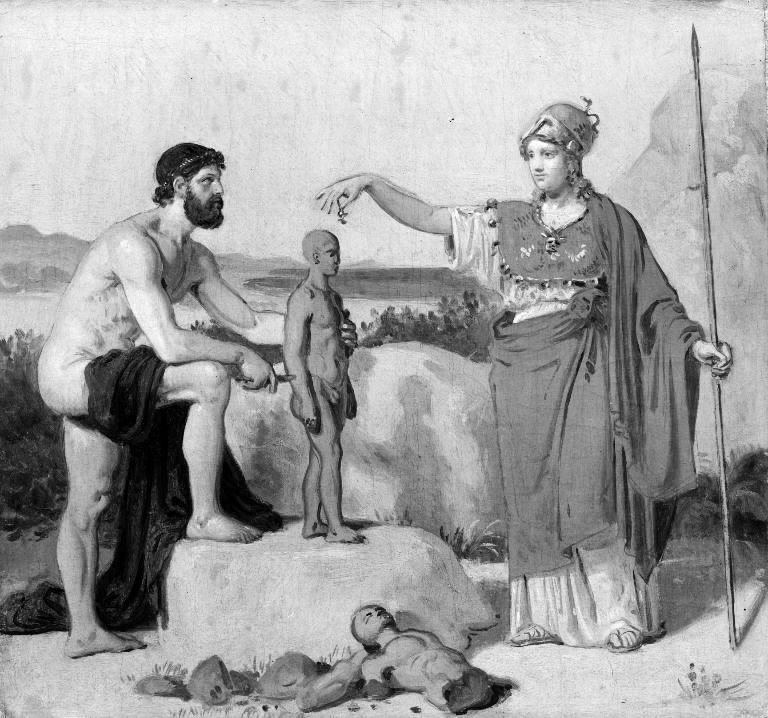
The Apotheotic Order holds the faculty of creation to be sacred: the capacity of living minds to conceive what has never been, to give it form, and to endow existence with meaning.
A work of art begins before it can be seen. A story precedes the page on which it is written; a building stands in the imagination before stone is laid. Through thought, speech and the works of their hands, human beings bring into existence things that did not exist before.
Yet the faculty does more than add new things to the world. Things were made and unmade long before there were minds to see them: stars kindled and burned out, mountains rose and wore away. What that long making lacked, so far as anyone knows, was anyone to whom it meant anything. Whether meaning is placed in the world or first made there, it is in conscious minds that it is found, told and given form: they find in the world beauty, order and story, name its parts and tell of them, and so make of a world of things a world of significance. The Order holds this to be the deepest sense in which the faculty is sacred: through it, the universe gives meaning to itself. The Maya Popol Vuh tells the same thought as myth: the gods made the world, and then tried again and again to make beings who could speak of it and remember.
A believer may see in this the purpose of a Creator who set meaning in creation and made minds able to know it and give it answer. One who believes in no god may see the universe, in its living creatures, coming for the first time to mean something to itself. Both may recognise the same wonder, and the same responsibility; see On Meaning and Historical Truth and The Creation of Adam.
The Order’s language for this faculty draws on several ancient sources. In the Egyptian theology of Ptah, the heart conceives and the tongue gives form to what has been conceived. In the Hermetic Asclepius, humanity is called a great miracle because it shares in the divine and makes images in which the divine may dwell, and it is set within the world to contemplate it and care for it; see Nothing Perishes. In Renaissance Florence, Pico della Mirandola described the human being as the free shaper and maker of itself. And the Dhammapada, among the best loved of Buddhist texts, opens: “All that we are is the result of what we have thought: it is founded on our thoughts, it is made up of our thoughts.”
A creation need not record an event that occurred in order to be meaningful. The stories of gods and heroes, works of sculpture and music, and imagined worlds may shape the lives of those who encounter them for centuries; see On Meaning and Historical Truth.
Not everything made is good because it was made. The same faculty that builds may also degrade and destroy. The Order’s reverence is for the faculty itself and for the works that enrich and protect life, and it counts the protection of conscious life, and of the freedom to create and experience meaning, among its first duties.
Nor does the Order require one final account of the divine. A believer may understand creation as participation in a gift received from the Creator; another may revere the same faculty while remaining uncertain of its origin. Both may recognise a responsibility to cultivate it well. In its highest work, the shaping of humanity’s understanding of the divine itself, the Order calls this faculty the Poetic Genius.