Nothing Perishes
The second god and the third
“All things change; nothing perishes.”
Ovid, Metamorphoses XV.165, the speech of Pythagoras
The Hermetic writings hold that nothing in the world is ever destroyed: what seems to die is only changed. The Order finds in this ancient intuition a reason why the keeping of what has been made is sacred.
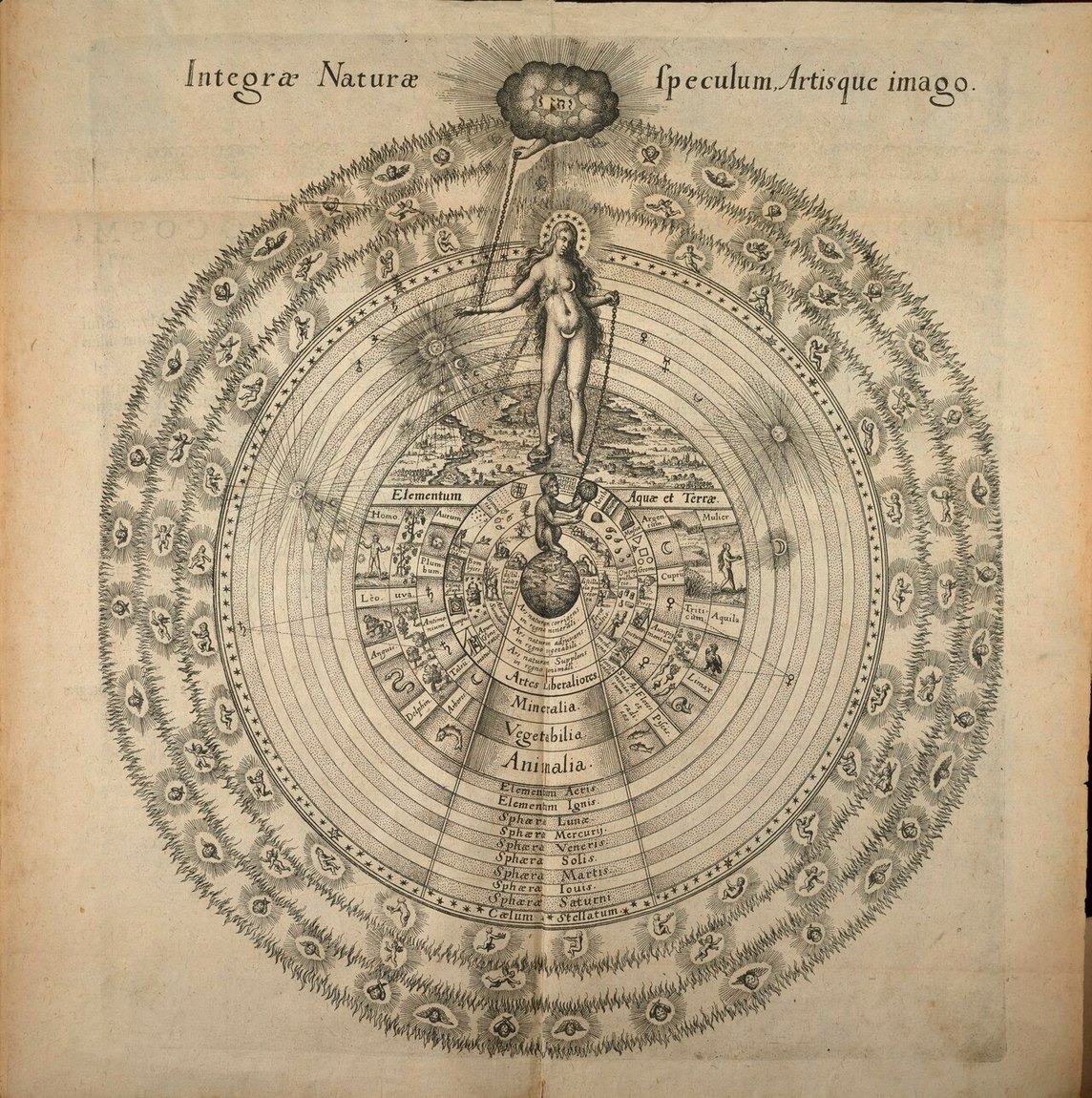
The Asclepius sets out an order of being in three steps: “The lord of eternity is the first god, the second is the world, the human being is the third.” The world, made in the image of its maker, is a living whole, and humanity is set within it with a particular office: to contemplate the things of heaven and to care for the things of the earth. The eighth treatise of the Corpus Hermeticum likewise calls the world the second god, and deathless, because it was made by one who is eternal.
That treatise bears the title “That none of the things that are is destroyed.” Those who call changes deaths, it says, are mistaken. What we name death is the loosening of a body, the parting of what had been joined, and what is loosened is not lost but returns to the world to be joined anew. The twelfth treatise says it again: things are dissolved not to be destroyed but to be made new, and the world that holds them all is alive throughout.
The thought was not Egypt’s alone. Ovid gives it to Pythagoras in the last book of the Metamorphoses: all things change and nothing perishes, the spirit wanders from body to body, and nature, the renewer of things, makes forms again out of other forms. In India the dance of Shiva holds creation and destruction within a single movement; see On Divine Play.
The Order receives these as ancient intuitions and reads them in its own way. What endures, on this reading, is substance: the stuff of the world, gathered and scattered and gathered again. What does not endure by itself is form. The marble of a broken statue remains in the world, but the statue does not; the breath that carried a song returns to the air, and the song, once forgotten, is gone. Form is where meaning lives, and it is minds that give it. Nothing of the world perishes, but anything a mind has made may.
For this reason the Order sets preservation beside creation. If humanity is the part of the world set to contemplate it and care for it, then to keep what has been made is to share in the world’s keeping of itself. It is through its conscious creatures that the second god comes to know and to remember what it holds; see The Sacred Faculty and To Create, To Preserve, To Uphold.