
On Divine Play
Lila, maya and the dance of Shiva
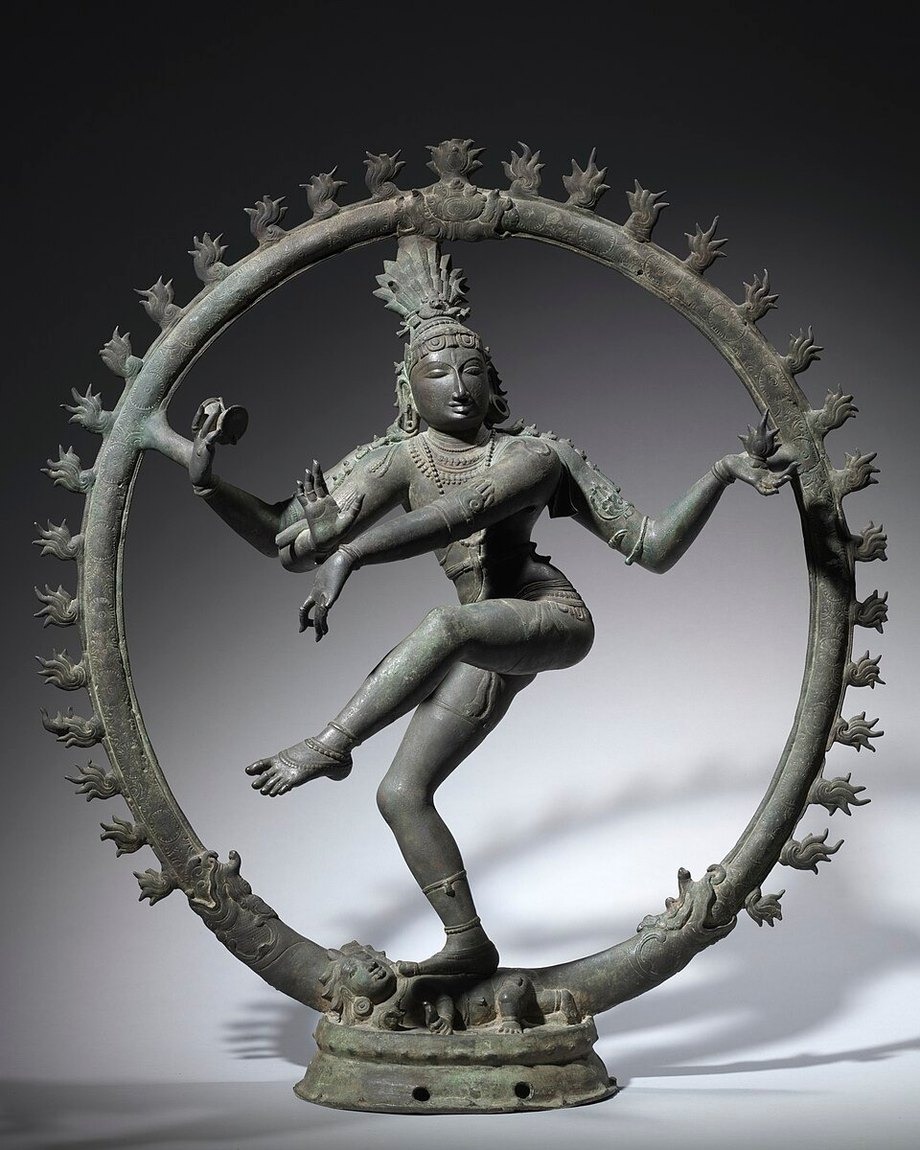
“But creation is mere sport, such as we see in ordinary life.”
Brahma Sutra II.1.33, after the translation of George Thibaut, 1890
Why would the divine make a world at all? One of the most beautiful answers ever given comes from India: for no reason but delight. The world is lila, play: the free and joyful activity of a maker who lacks nothing.
The Brahma Sutra, a founding text of Hindu philosophy, meets the old objection that a perfect being can have no need to create. Its answer is that creation is lila, like the play of those who already have all they could want. The thought runs through Indian devotion. The dances of Krishna with the herdswomen of Vrindavan are called his lila, and the life of Rama is still performed each autumn as a sacred play, the Ramlila.
Close to lila stands maya. In later thought the word came to mean illusion, the veil of appearances. In the oldest hymns it means something nearer to craft or wonder-working: the power by which a god takes on many forms. By his maya, one hymn says, Indra goes about in many shapes. A famous tale of the Puranas makes the world a dream. The god Vishnu sleeps upon the cosmic ocean, and the universe is his dream. The sage Markandeya, wandering the world for ages, slips from the sleeper’s mouth into the dark waters, and sees for the first time the god who has been dreaming him. In China, Zhuangzi woke from dreaming he was a butterfly and could not tell which of them had dreamed the other.
The dance of Shiva gives the same thought a body. In the great bronzes made under the Chola kings of southern India, Shiva dances within a ring of flame. One hand holds the small drum whose beat brings the world into being; another holds the fire that ends it; a third is raised to still fear; a fourth points to his lifted foot, the refuge of the devotee. Beneath his other foot lies a small figure of forgetfulness. Creation and destruction are one continuous dance, and the dancer is at peace within it. The Hermetic writings say something close: that in the world nothing perishes, but all is changed; see Nothing Perishes.
These are the teachings of living faiths, and for those who hold them they speak of God himself, and are honoured here in that sense. The Order recognises in them a kinship with its own convictions: that making may be joy and not only labour, as Pico’s free Adam and Hokusai, the old man mad about drawing, would both have agreed; that a made world may be a dream whose creatures come in time to know their dreamer, as the characters of every story are dreamed; and that the life of the maker passes into what is made; see The First and Second Breath, Works That Come Alive and On the Making of Gods.