
Works That Come Alive
Pygmalion, the golem and the creature
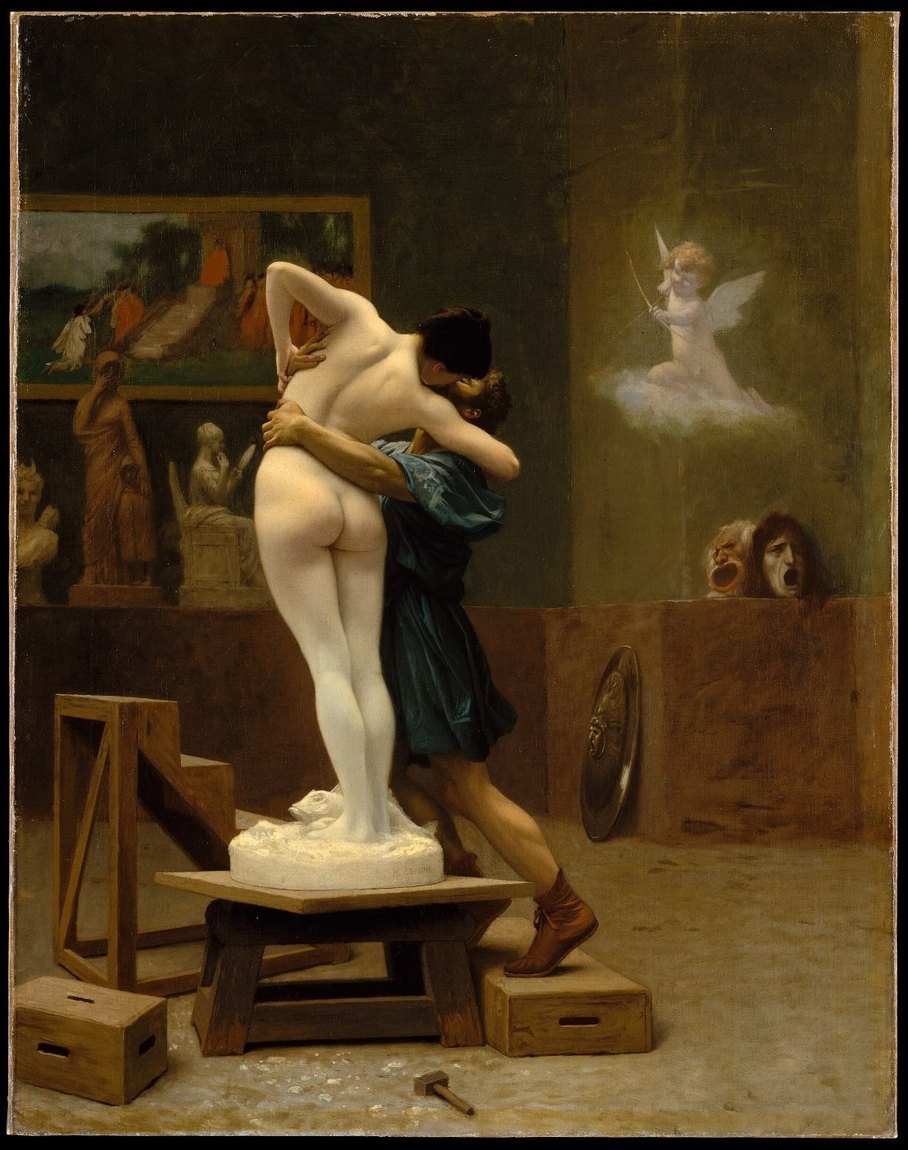
“The ivory lost its hardness and grew soft beneath his fingers.”
Ovid, Metamorphoses X, paraphrased from the Latin
Among the oldest stories told about making is the story of a made thing that comes to life.
Ovid tells of Pygmalion, a sculptor of Cyprus, who carved a woman of ivory more beautiful than any living woman and fell in love with his own work. At the festival of Venus he prayed for a bride like his statue; returning home, he kissed it, and the ivory grew warm and soft beneath his hands. Ovid does not name her. The name Galatea was given to her centuries later.
The ancient world knew many such works. Homer gives the smith-god Hephaestus handmaidens of gold, with understanding in their hearts, voice and strength. The statues of Daedalus were said to be so lifelike that they had to be tied down to keep them from running away; Plato mentions them in the Meno. In Egypt the statues of the temples were given breath through the Opening of the Mouth, and the Hermetic Asclepius speaks of statues ensouled and able to act; see On the Making of Gods.
Jewish tradition tells of the golem, a figure of clay brought to life through the divine name. The Talmud records that a sage once created a man; later legend credited Rabbi Judah Loew of Prague with a golem that served and protected the community, and told that it came to life when the word emet, truth, was written on its brow, and returned to dust when the first letter was erased, leaving met, death. Later legend linked such feats to the Book of Creation, in which God makes the world from the letters of the alphabet.
In 1818 Mary Shelley gave the story its modern form. Victor Frankenstein makes a living being and then abandons it in horror, and the creature, denied the care of its maker, turns in grief to destruction.
These stories give the form of myth to something that is true of all works. A made thing takes on a life of its own: it outlives its maker, acts upon those who meet it, and goes where its maker never intended. The Order reads three lessons in them. Pygmalion’s statue was loved into life, and works live through the love of those who receive them. The golem had to be governed, for a made thing’s power is real. And Frankenstein’s creature was abandoned, which is why the Order holds that a maker owes care to what they bring into the world; see To Create, To Preserve, To Uphold and the First and Second Breath.