
The Asclepius
The Perfect Discourse
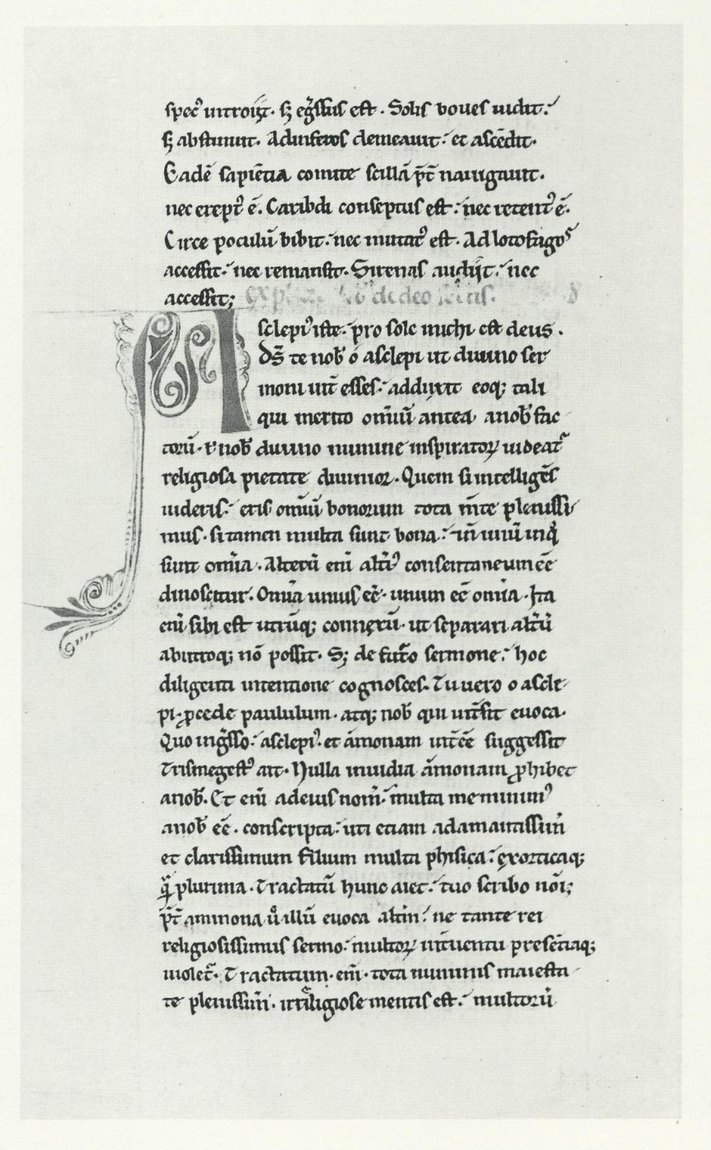
“A great miracle, Asclepius, is the human being.”
Asclepius 6
The Asclepius is a Hermetic dialogue surviving complete only in Latin. Its Greek original, known as the Perfect Discourse, is lost apart from fragments and a Coptic excerpt.
The dialogue presents Hermes teaching three pupils, Asclepius, Tat and Ammon, in a sanctuary. Through the Middle Ages the Latin text circulated among the works of the second-century writer Apuleius, which helped to preserve it. Lactantius quoted the Greek original in the early fourth century, and part of it was found in Coptic translation among the Nag Hammadi codices.
Its most celebrated passage describes humanity as a great miracle: a being that passes into the nature of a god as though it were a god, that knows the divine and is joined to it by mind, and that cares for the earth. Its most controversial passage describes the making of gods: the statues of the temples, animated through rites, which humanity fashions after its own likeness as the Creator made the heavenly gods after his.
The dialogue also contains a famous lament, in which Hermes foretells a time when Egypt will be abandoned by its gods and its temples filled with the dead. Augustine read this as a prophecy of the end of paganism, and quoted it for that reason.
In 1486 Pico della Mirandola opened his Oration with the words of the Asclepius, and the phrase has been associated with Renaissance humanism ever since. The Order regards the dialogue as the single text that comes closest to its own convictions.