
The Gods of Craft
The divine makers of many peoples
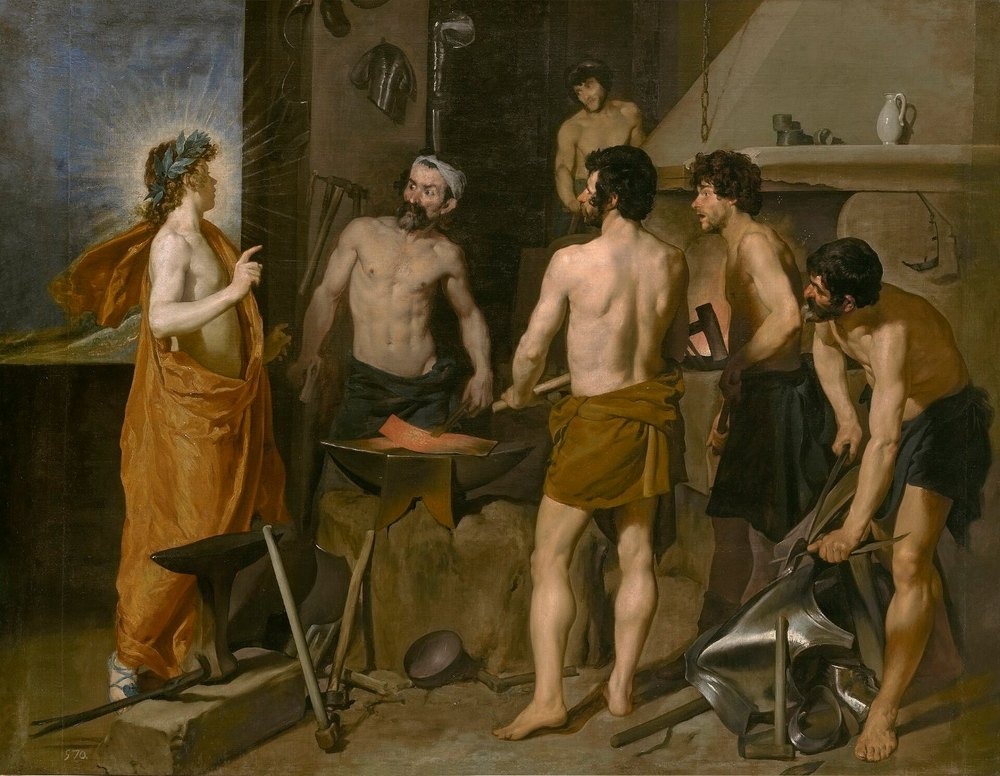
“Sing, clear-voiced Muse, of Hephaestus famed for his skill, who with grey-eyed Athena taught glorious crafts to people on the earth.”
Homeric Hymn 20, translated from the Greek
Almost every people that has told stories of its gods has given one of them the work of making. The Order reads in this the oldest witness to its own conviction: that the power to make belongs among the things held divine.
In Egypt, Ptah of Memphis created the world by conceiving it in his heart and speaking it with his tongue, and was the patron of sculptors, smiths and builders; his high priest bore the title Greatest of the Directors of Craftsmen. In Greece the maker was Hephaestus, the lame smith of Olympus, who built the palaces of the gods, forged the shield of Achilles, shaped the first woman from clay at the command of Zeus and made golden handmaidens who could think and speak; see Works That Come Alive. Athena shared his honour as Athena Ergane, the Worker, patron of weaving and handiwork, and the Athenians honoured the two together at the festival of the bronze-workers.
In the city of Ugarit, on the coast of Syria, the craftsman god Kothar-wa-Khasis, Skilful-and-Wise, forged the weapons with which Baal defeated the sea and built Baal’s palace of silver and gold. In India, Vishvakarma is the architect of the gods, maker of their weapons, chariots and cities, and he is still honoured each year by craftspeople who lay down their tools before him.
In Ireland, Goibniu the smith of the Tuatha Dé Danann made weapons that never failed and kept a feast whose ale preserved the gods from age and death. The Germanic peoples told of Wayland the Smith, lamed and imprisoned by a king, who forged himself wings and flew from his captivity; a long barrow on the chalk downs of southern England has borne his name for a thousand years. In the Finnish Kalevala, the smith Ilmarinen hammered out the dome of the sky and forged the Sampo, a mill that ground out plenty.
Certain features recur. The divine maker often serves the other gods more than he rules them, arming them, housing them and feeding them. He is often wounded or set apart, as Hephaestus and Wayland were lame. And his gifts are often gifts of life: the ale of Goibniu, the plenty of the Sampo, the golden maidens who move and speak.
The Order reads these figures as many peoples arriving, each in its own way, at the same recognition: that to make is a godlike thing, and that the maker deserves a place among the divine. What the old stories gave to the gods of the forge, the Order holds to be present in every human maker; see The Sacred Faculty and On Apotheosis.