The Opening of the Mouth
The ritual that gave images life
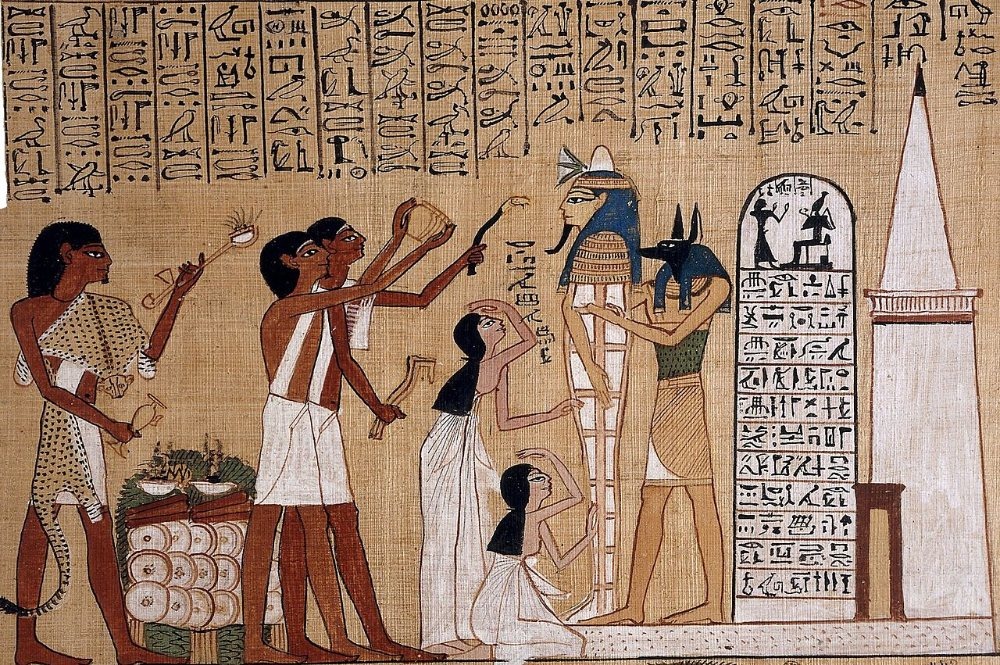
The Opening of the Mouth was an Egyptian ritual by which statues, mummies and other images were made able to breathe, see, eat and receive offerings.
The ritual is attested from the Old Kingdom and is known most fully from New Kingdom tomb inscriptions. It was performed by priests, among them a sem-priest wearing a leopard skin, who touched the mouth and eyes of the image with a series of instruments, including an adze and a forked blade called the peseshkef. Offerings, incantations and purifications accompanied the touching.
It was performed on the mummies of the dead, as in the scene from the papyrus of the royal scribe Hunefer illustrated here, but it was also performed on cult statues, often in the temple workshop where they had been made. A statue carved by a sculptor was thereby made fit to house the presence of a god.
This practice lies behind the Hermetic passage on the making of gods in the Asclepius, which speaks of statues ensouled through human rites.
A close kinship can be seen in India, where the image of a god in a temple is brought to life in the rite of prana pratishtha, the establishing of breath. Near the end of the rite the image’s eyes are opened, often by painting in the pupils, and the first gaze of the god is received in a mirror. Two peoples who never met each held that a made image must be given breath and sight before it can be served.
For the Order, the Opening of the Mouth is an ancient acknowledgement that a made thing may become more than its material. A craftsman’s work, once completed and received, could be treated as living. The Order recognises the insight within the rite: that what the hand has made, the community may bring to life. See the First and Second Breath.