
The Shabaka Stone
An Egyptian account of creation
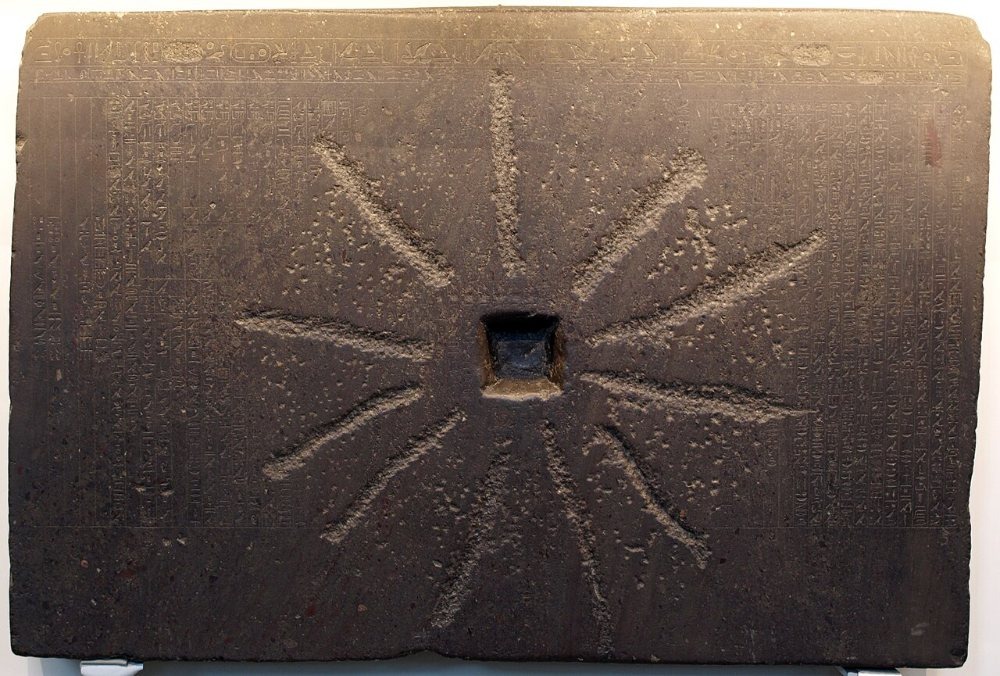
The Shabaka Stone is a slab of black stone in the British Museum, inscribed with an account of the creator god Ptah and the Memphite understanding of creation.
The stone was inscribed in the reign of Shabaka, a Kushite king of Egypt’s Twenty-fifth Dynasty. Its text claims to copy an ancient document that had been found worm-eaten; the British Museum notes that this story may itself be an ancient literary device intended to lend the text authority. The original date of the theology remains debated.
At some later time the stone was used as a millstone, which wore away much of the central inscription. It was presented to the British Museum in 1805 by George, second Earl Spencer. The surviving registers nevertheless preserve a remarkable passage in which the heart devises and the tongue speaks, and Ptah gives form to the world through this process.
The stone is the oldest witness to the teaching of Ptah and the spoken word that the Order holds dear. Its history has a lesson of its own: an object made to preserve a sacred text was later ground under a wheel, and survived only in part. The Order keeps both facts in mind.