
The Epic of Gilgamesh
The walls of Uruk
“Go up on the wall of Uruk and walk about; survey its foundations, examine its brickwork.”
The Epic of Gilgamesh, Tablet XI, translated from the Akkadian
The Epic of Gilgamesh is the oldest great work of literature to survive. It tells of a king who sought to escape death and become like the gods, and who found his immortality instead in what he had made.
Stories of Gilgamesh, a king of the city of Uruk in southern Mesopotamia, were told in Sumerian by about 2100 BC. Over the following centuries they were gathered into a single epic in Akkadian, and in its standard form, of about 1200 BC, it was attributed to a scholar named Sin-leqi-unninni. It was written in cuneiform on tablets of clay.
Gilgamesh is two-thirds god and one-third man, a proud and restless king. The gods make him a companion, the wild man Enkidu, and together they kill the guardian of the Cedar Forest and the Bull of Heaven. When Enkidu dies, Gilgamesh is seized by the fear of death and sets out across the world to find Utnapishtim, the one man granted eternal life after the great flood. He fails every test. He cannot stay awake for seven nights, and the plant of youth he wins from the bottom of the sea is stolen by a snake while he bathes.
He returns home with the boatman Urshanabi, and the poem ends where it began, on the walls of Uruk. Go up on the wall, he tells the boatman, walk about it, look at its foundations and its brickwork. The king who could not become a god shows what remains of him: the city he built.
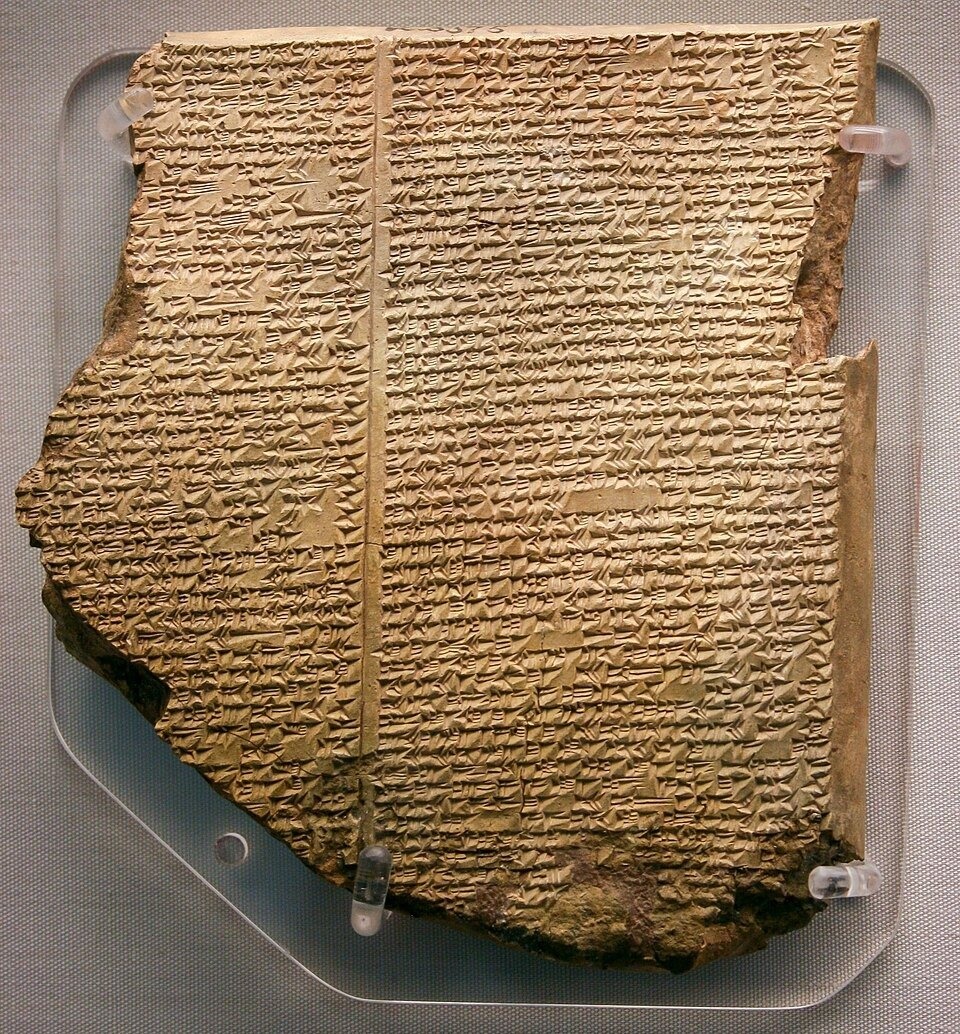
The poem itself survived in the same way. In the seventh century BC the Assyrian king Ashurbanipal gathered tablets from across Mesopotamia into a great library at Nineveh. When the city fell in 612 BC, fire swept the palace and baked his clay tablets hard. Buried for two and a half thousand years, they were dug up in the 1850s, and in 1872 the young George Smith, working through them at the British Museum, found on the eleventh tablet a flood story strikingly like that of Noah.
The Order reads the epic as the first telling of its own conviction about apotheosis. The body cannot be made immortal; the work can. What Gilgamesh built outlived him, and what the scribes wrote outlived the fire; see Those Who Preserve and Works That Come Alive.