
Isaac Casaubon and the Dating of Hermes
The end of a legend and the survival of a text
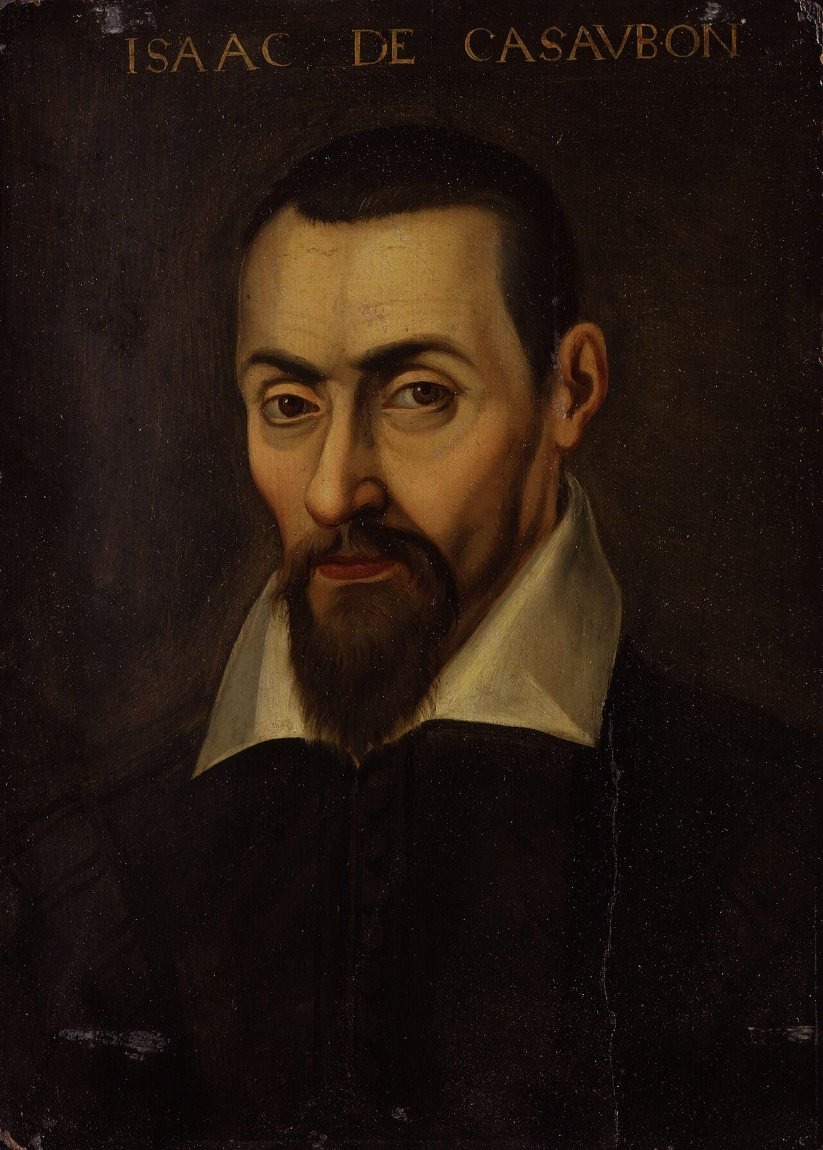
In 1614 the classical scholar Isaac Casaubon demonstrated that the Hermetic writings were not the work of an ancient Egyptian sage but texts of the early Christian era.
Casaubon was born in Geneva in 1559 to a Huguenot family and became one of the most learned scholars of his age. He held posts in Montpellier and Paris, and in 1610 moved to England at the invitation of James I. His last major work, published in 1614, was a critique of the Annales Ecclesiastici of Cardinal Caesar Baronius, which had cited Hermes as an ancient pagan prophet of Christianity.
Casaubon examined the Greek of the Corpus Hermeticum and found in it the vocabulary and ideas of later Greek philosophy and of early Christian theology. A teacher contemporary with Moses, he argued, could not have written in this way. The texts must belong to a much later period. Modern scholarship has confirmed his conclusion, dating the treatises to roughly the first to third centuries AD, while recognising more Egyptian material in them than Casaubon allowed.
Hermes lost his standing as the most ancient of theologians. His writings did not disappear. They continued to be read, translated and studied, and are now valued as documents of the religious and philosophical world of Roman Egypt.
The Order honours Casaubon as a model of the scholarship its archive aspires to: devoted to old texts, and unwilling to let devotion stand in the way of the truth about them. See On Meaning and Historical Truth.