
The Hermes of Siena
A pavement panel in Siena Cathedral
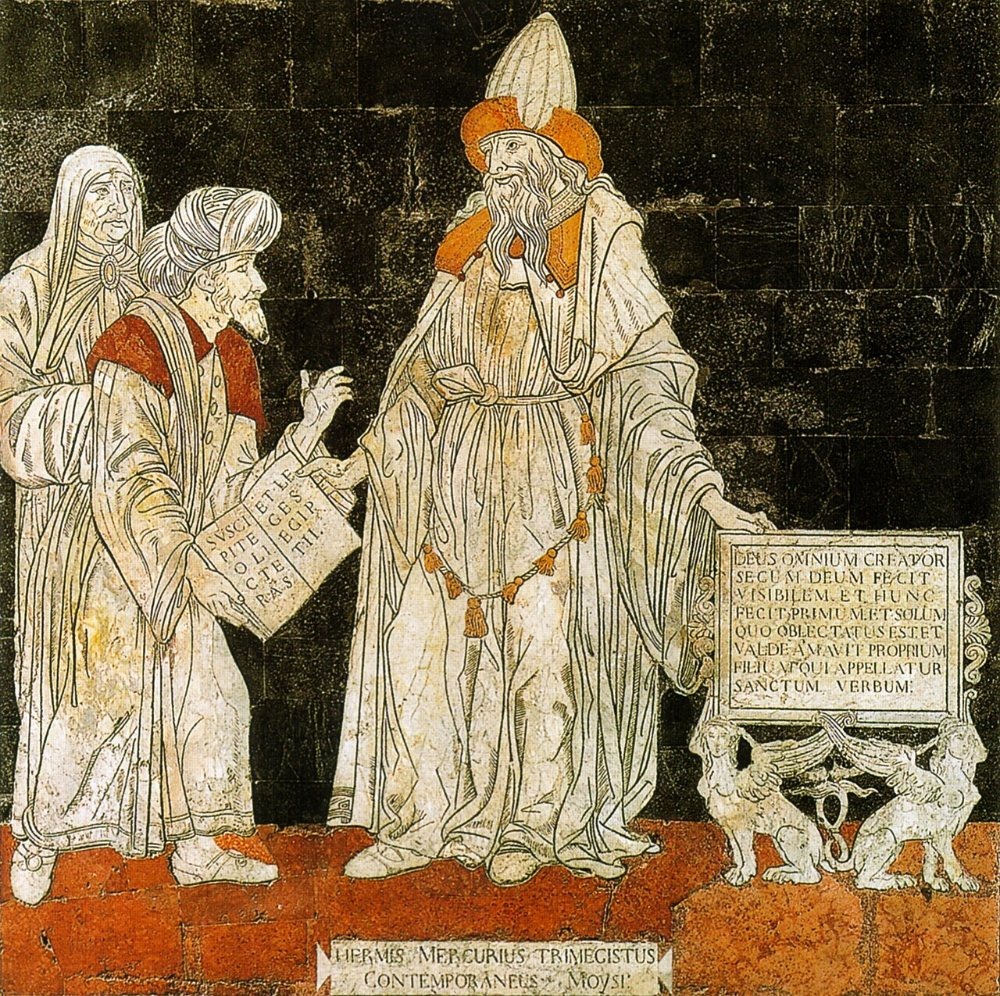
Near the main entrance of Siena Cathedral, set into the marble floor, is a panel depicting Hermes Trismegistus as a teacher of the Egyptians. It is the best known image of Hermes from the Renaissance and the one most closely associated with the Order.
The pavement of Siena Cathedral was made over nearly two centuries, from the fourteenth to the sixteenth, in inlaid and incised marble. The Hermes panel, dated 1488, is attributed to the Sienese artist Giovanni di Stefano. What visitors see today is a nineteenth-century remaking of the worn original.
Hermes stands in the centre in long robes and a mitred hat. With one hand he offers an open book to two figures in Eastern dress; with the other he rests on a tablet supported by sphinxes. The inscription beneath names him Hermes Mercurius Trismegistus, contemporary of Moses. The book bears the words “Take up your letters and laws, O Egyptians.” The tablet quotes, in Latin, a passage from the Asclepius known in the Renaissance through Lactantius: that God, creator of all, made a second, visible god, and loved him as his own son.
The panel reflects the esteem in which Hermes was held after Ficino’s translation. Placed at the threshold of a cathedral, among the prophetic Sibyls of the pavement, he appears as a gentile sage who foresaw Christian truth. The same belief would be overturned by Casaubon little more than a century later.
The Order uses the Siena Hermes as the principal image of its patron, and holds the Cathedral of Siena in particular regard for having set him at its threshold, where every visitor must pass him on the way in. The panel shows him as the Order would have him seen: a teacher offering a book. Much of the pavement is kept covered for its protection and uncovered for part of each year, so that to see Hermes in his place is itself a small pilgrimage. The cathedral remains a place of Christian worship, and is approached as such; see In the Sanctuaries of Others.