
In the Sanctuaries of Others
On reverence and respect
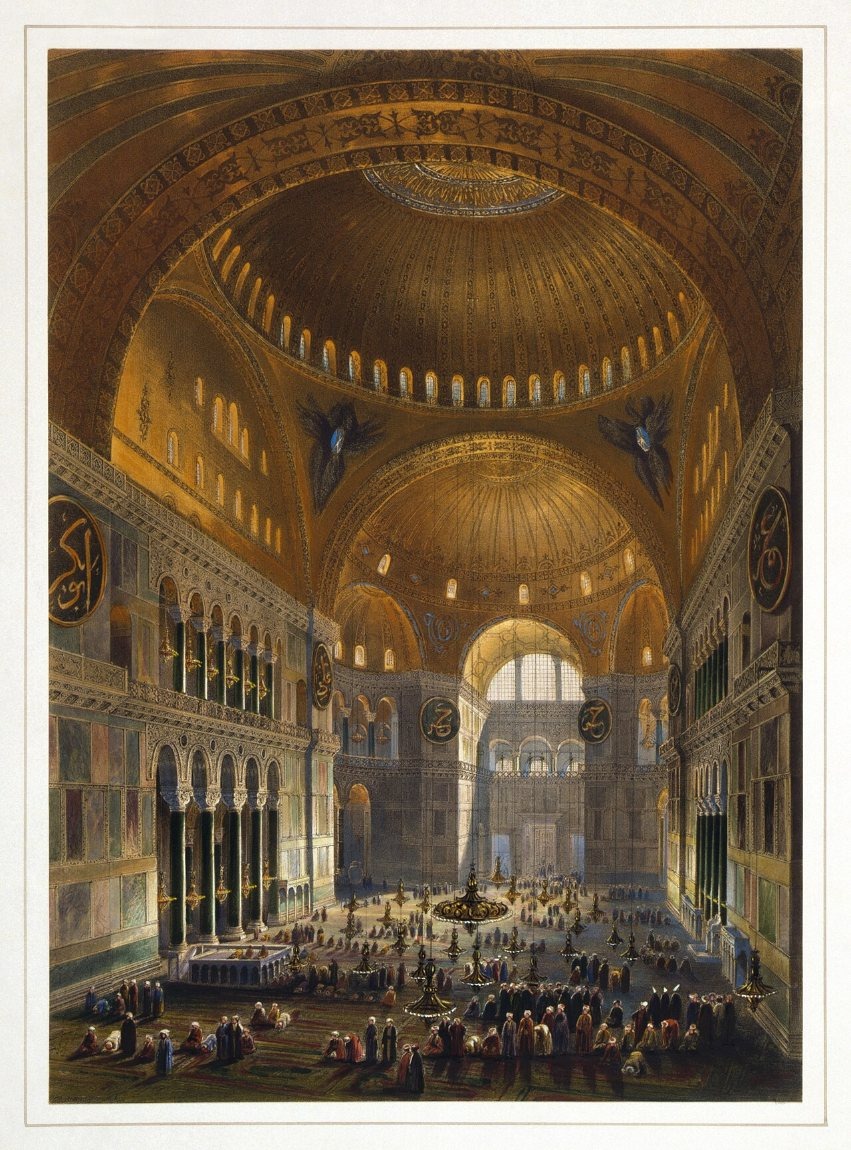
Members of the Order may feel genuine reverence in churches, mosques, synagogues, Hindu and Buddhist temples, ancient sanctuaries and other places of worship, including those whose theology they do not share.
Such reverence begins with respect for the community that maintains the place. A member observes its customs, restrictions and expectations: dress, silence, the removal of shoes, the times set aside for prayer, the places where visitors may not go. A functioning sanctuary is first of all a place of worship, and is entered as such, not as an exhibition.
The Order’s reverence for the creative faculty adds a dimension to a visitor’s regard and takes nothing from the faith of those who worship there. A member honours that faith as its own people hold it. In a mosque the faithful worship God, Allah, as the one God, the Supreme Divine itself, and a member respects that worship in its own terms, whatever they themselves believe about the source from which humanity’s ideas of the divine have come. A member may admire the work of builders, painters and musicians while honouring the prayers for which that work was made and the story it was made to tell.
Some buildings have been held sacred by more than one community. Hagia Sophia in Constantinople was built as a cathedral under the emperor Justinian and completed in 537. After 1453 it became a mosque; between 1847 and 1849 the architects Gaspare and Giuseppe Fossati restored it for Sultan Abdülmecid, and the lithographs published after their work, such as the one shown here, record its interior as it then appeared. It became a museum in 1934 and a mosque again in 2020. Across these changes, generations of worshippers have brought their devotion to the same great space.
Members need not agree about the ultimate source of the sacred in order to recognise, cultivate and protect what they experience as sacred together. See On the Nature of Temples.