
The Ankh in Christian Egypt
The crux ansata
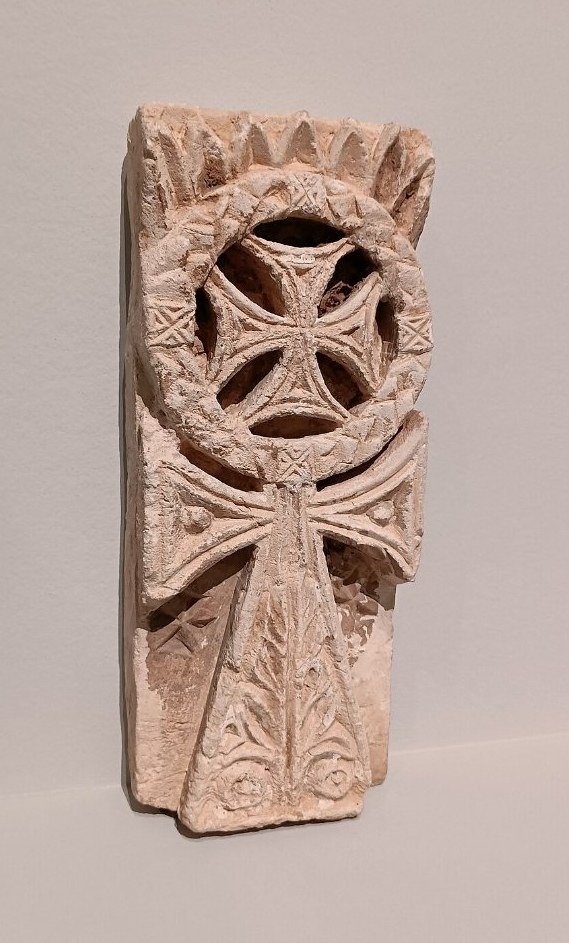
In Christian Egypt the Ankh was adopted as a form of the cross, known in Latin as the crux ansata, the “handled cross.”
From the fourth century onward the sign appears on Coptic tombstones, textiles, manuscripts and objects of daily use, sometimes enclosing a Christian monogram within its loop. Its adoption was natural. The shape already resembled a cross, and its ancient meaning, life, could be understood as the eternal life Christians proclaimed.
The historians Socrates Scholasticus and Sozomen report that when the Serapeum was destroyed in 391, cross-shaped hieroglyphs were found on its stones and explained by Egyptian priests as signifying “the life to come.” The story shows that the continuity between the old sign and the new was felt even in the hour of the temple’s fall.
The history of the crux ansata shows what the Order holds to be true of symbols: a symbol made by one tradition can be received by another and given new life without losing the old. The Order’s own use of the Ankh belongs to this long history of reception, and it wears the sign with respect for all who have carried it before.