The Council of Nicaea
The first ecumenical council
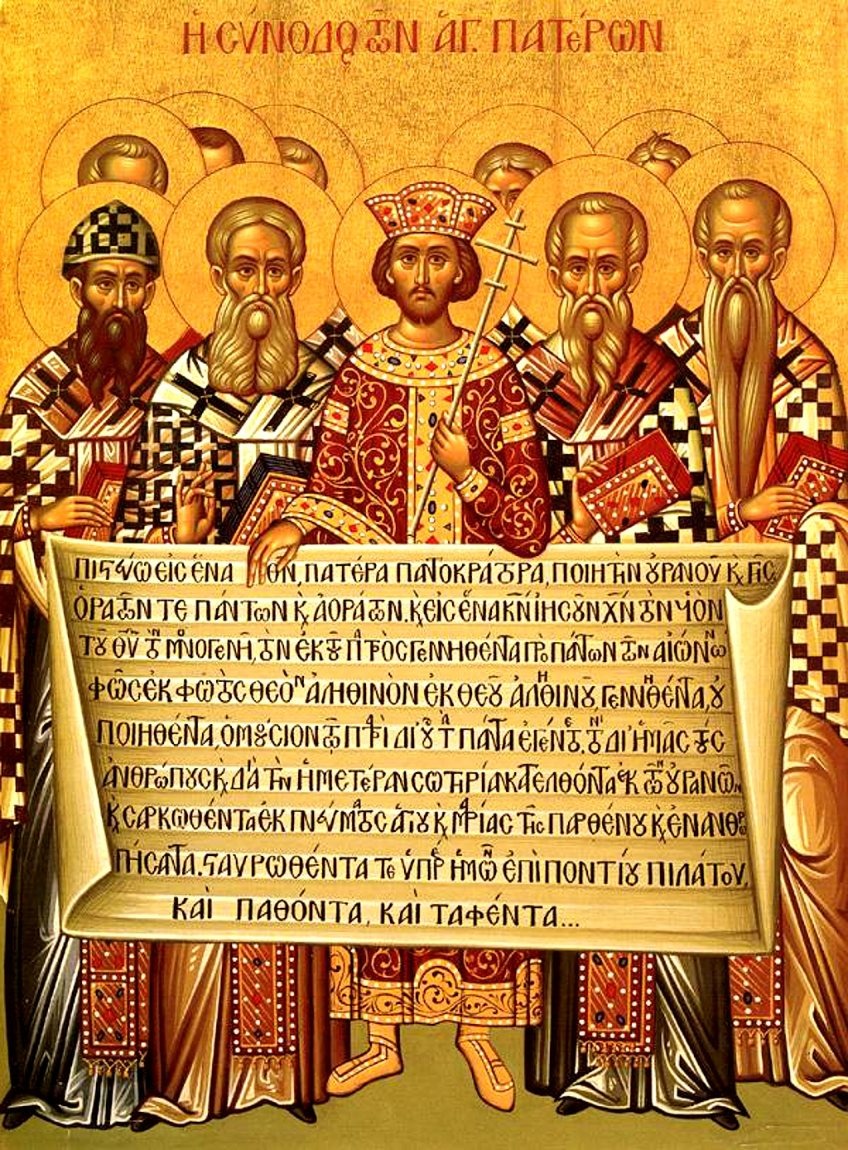
The First Council of Nicaea was convened by the Emperor Constantine in AD 325 to resolve disputes that were dividing the Christian Church.
The principal question concerned the relation of the Son to God the Father, and in particular the teaching of Arius, a presbyter of Alexandria, who held that the Son was a creature brought into being by the Father. Bishops gathered at Nicaea in Bithynia, near the imperial residence at Nicomedia; tradition later set their number at 318. Among them were Alexander, bishop of Alexandria, with his deacon Athanasius, and the historian Eusebius of Caesarea.
The council produced a creed which asserted that the Son was “begotten, not made, of one substance with the Father,” using the Greek word homoousios. It also addressed the date of Easter and matters of church discipline. The controversy did not end with the council, and disputes over the creed’s meaning continued for more than half a century.
The creed opens by confessing belief in one God, “maker of all things, visible and invisible.” For the Order, Nicaea is significant less for the dispute it addressed than for the questions it made unavoidable: what it means to make, what it means to beget, and how the human mind can speak at all of the origin of things. See Begotten, Not Made.
Nicaea also marks the moment at which imperial authority became closely involved in Christian doctrine. The new partnership between church and empire would shape the fate of the old religions within a lifetime, as the history of the Serapeum shows. A second council met at Nicaea in 787 and restored the veneration of holy images; see John of Damascus and the Holy Images.