Alexandria in Late Antiquity
A city of converging traditions
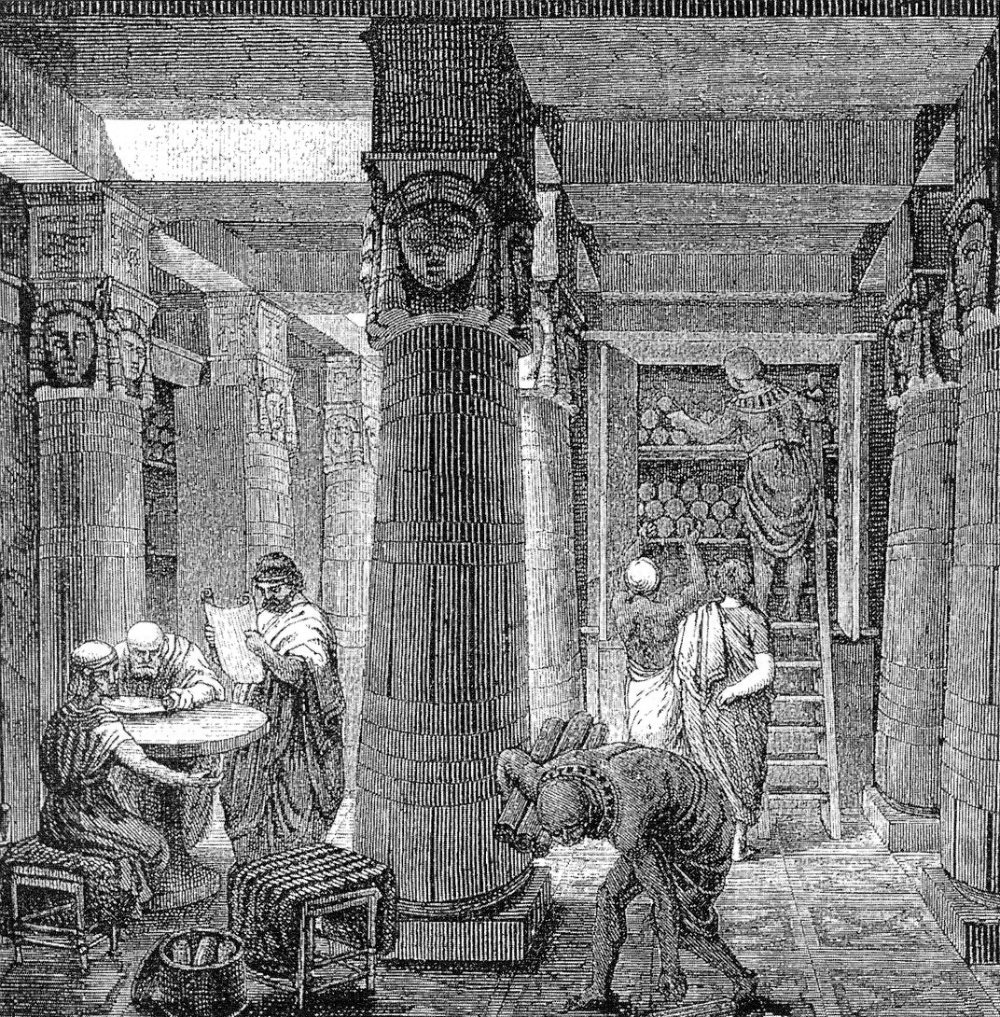
Alexandria was one of the great intellectual, religious and commercial centres of the ancient Mediterranean, shaped by Greek, Egyptian, Jewish and Christian traditions.
Founded by Alexander the Great in 331 BC, the city became the capital of the Ptolemaic kings, who established the Museum and the famous Library. By the Roman imperial period its intellectual life was no longer confined to those institutions. Philosophical teaching and religious debate took place in overlapping circles of students, scholars and patrons, and at temples such as the Serapeum.
The city produced or sheltered many of the writers who shaped the ancient conversation about God and creation. Philo, a Jewish philosopher of the first century, read the book of Genesis through Plato. Clement and Origen taught Christian theology in the language of Greek philosophy. Plotinus studied in Alexandria before founding the Neoplatonic school in Rome. Hermetic writings circulated in the same Egyptian world.
The fourth century brought sharper conflict. Arius, an Alexandrian presbyter, set off the controversy that led to the Council of Nicaea; his bishop Alexander and the deacon Athanasius led the opposition. In 391 the Serapeum was destroyed. In 415 the philosopher Hypatia was murdered by a Christian mob.
Alexandria occupies a central place in the Order’s archive because the Hermetic, Platonic and Christian understandings of creation developed there side by side, often in argument and sometimes in violence. The Order remembers both the conversation and its cost.