The Serapeum of Alexandria
The last great temple
The Serapeum was the great temple of the god Serapis in Alexandria, and one of the most celebrated buildings of the ancient world until its destruction in 391.
The cult of Serapis, a god combining features of Osiris, the Apis bull and Greek Zeus, was promoted by the early Ptolemies. The temple was founded under Ptolemy III in the third century BC and rebuilt on a grander scale in the Roman period. Ancient writers described its colonnades and courts, and it is said to have housed a library of its own.
In 391, after violent clashes between Christians and the temple’s defenders in the city, the bishop Theophilus obtained imperial support to act against it. The temple was stormed and the great cult statue of Serapis was cut down and burned. The church historian Rufinus, who had spent years among the monks and clergy of Egypt, left the best known account.
Two later historians, Socrates Scholasticus and Sozomen, record a curious episode. Among the temple’s hieroglyphs were signs in the shape of a cross, which Egyptian priests explained as meaning “the life to come.” Christians took this as a sign in their own favour. The report is usually understood to refer to the Ankh; see the Ankh in Christian Egypt.
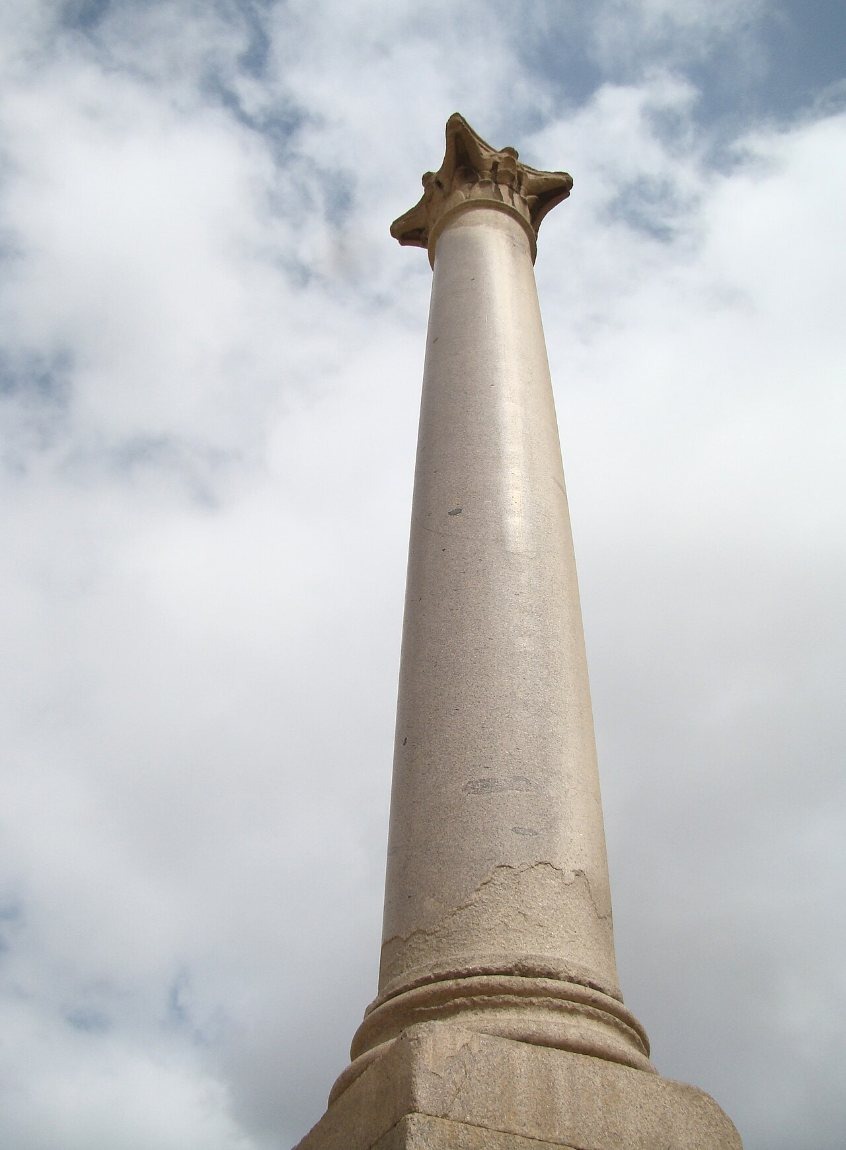
Little of the Serapeum now remains except the column raised in honour of Diocletian, often mistakenly called Pompey’s Pillar. The Order remembers the Serapeum as a caution. Works preserved for centuries may be lost in a day, and the duty to preserve includes the defence of works whose makers’ beliefs one does not share.