
Michelangelo Buonarroti
The hand that obeys the intellect
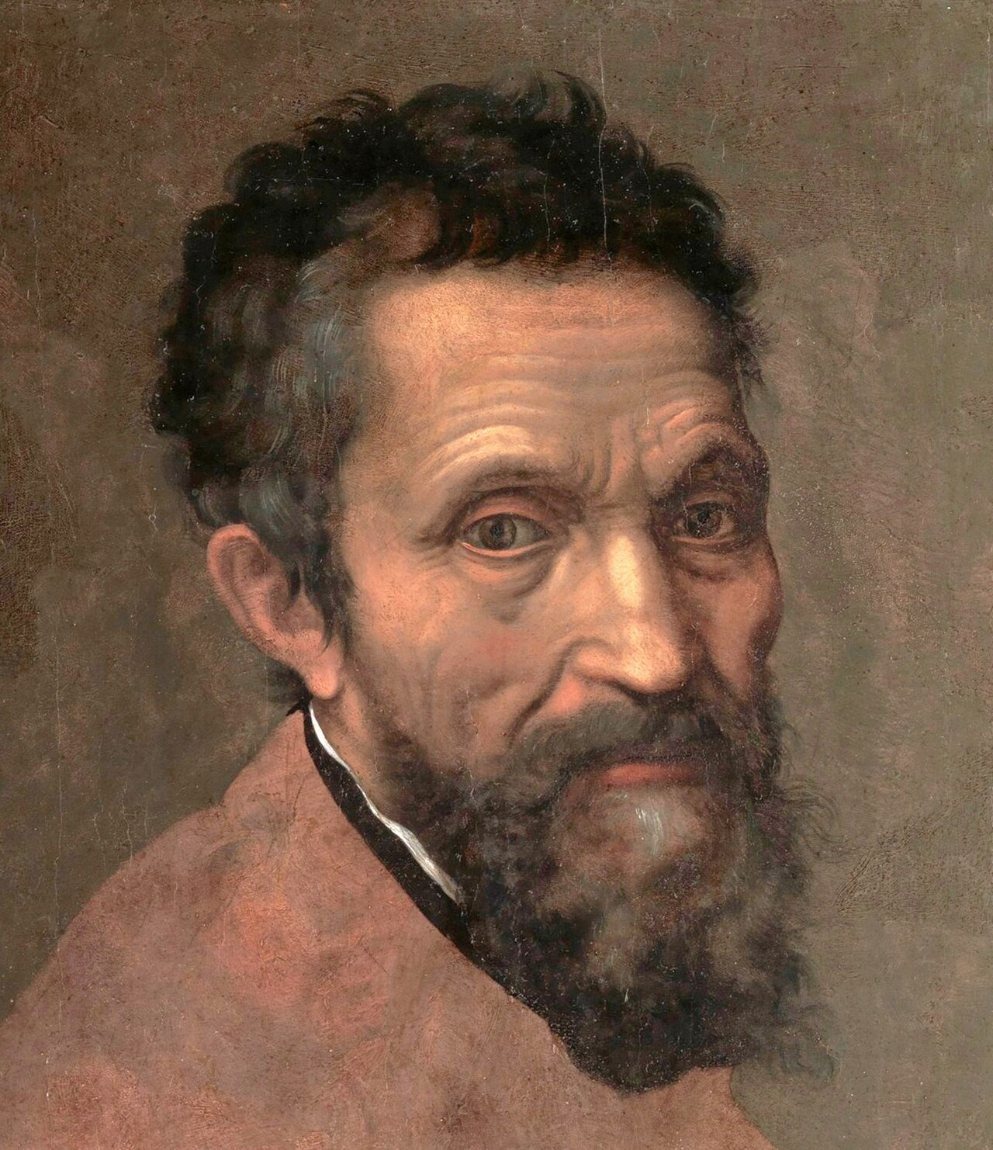
“The finest artist has no conception that a single block of marble does not hold within its excess; and only the hand that obeys the intellect can reach it.”
Michelangelo, Rime 151, translated from the Italian
Michelangelo Buonarroti was a Florentine sculptor, painter, architect and poet, and for many the greatest artist of the Italian Renaissance.
Michelangelo was born at Caprese in 1475 and trained in Florence in the workshop of Domenico Ghirlandaio. As a youth he lived for a time in the household of Lorenzo de’ Medici, whose circle included the poet Angelo Poliziano, and whose friends included Ficino and Pico. The extent of their influence on him is debated, but his art and poetry share much with the Platonic thought of Florence.
His works include the Pietà in St Peter’s (1498–99), the David (1501–04), the ceiling of the Sistine Chapel (1508–12), the tombs of the Medici, the Last Judgement (1536–41) and the design of the dome of St Peter’s. He died in Rome in 1564, still at work.
In one of his sonnets Michelangelo describes sculpture as the release of a form already present in the stone: the artist’s concept lies hidden in the marble, and only the hand obedient to the intellect can uncover it. The image joins two things the Order holds together, the idea conceived in the mind and the labour that gives it body. Two thousand years earlier, the Chinese sage Zhuangzi told of a woodworker who went into the forest and saw the bell stand he was to carve already waiting inside a tree.
To the Order, Michelangelo is perhaps the most complete example of the creative faculty in European history, and his Creation of Adam one of the images most closely associated with its thought.