Johann Sebastian Bach
Soli Deo gloria
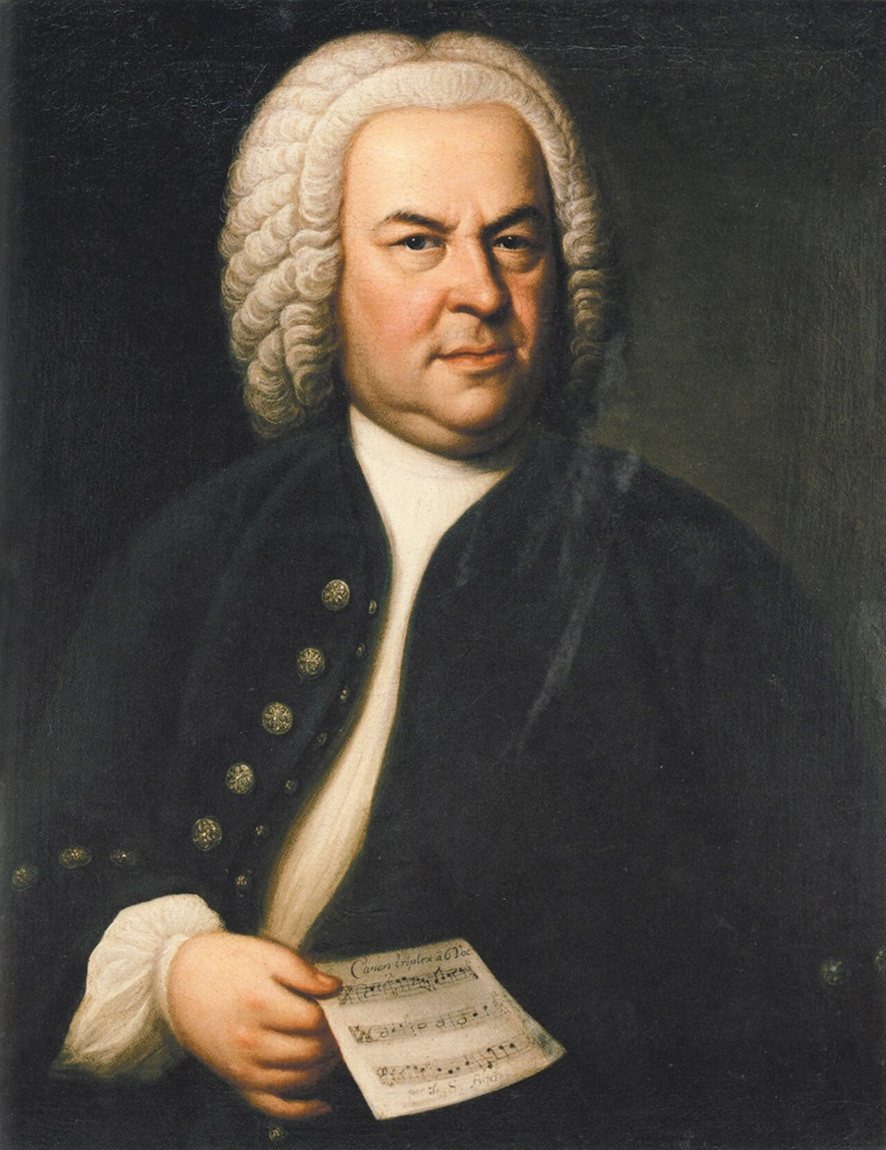
Johann Sebastian Bach was a German composer and organist whose music is regarded as one of the summits of Western art.
Born at Eisenach in 1685 into a family of musicians, Bach held posts as organist and court musician at Arnstadt, Mühlhausen, Weimar and Köthen, where he wrote the Brandenburg Concertos. In 1723 he became Thomaskantor in Leipzig, responsible for the music of the city’s principal churches, and held the post until his death in 1750.
His works include the St Matthew and St John Passions, the Mass in B minor, some two hundred surviving cantatas, The Well-Tempered Clavier and the unfinished Art of Fugue. They join the strictest craftsmanship of counterpoint to depths of feeling that few composers have approached.
Bach often headed his scores with the letters J. J., Jesu juva, “Jesus, help,” and closed them with S. D. G., Soli Deo gloria, “to God alone the glory.” After his death his music fell partly out of fashion, until Felix Mendelssohn’s performance of the St Matthew Passion in 1829 began its revival. The Order honours in Bach the union of discipline, devotion and making that it most reveres.