
Coleridge on the Imagination
The finite repetition of the eternal act
“The primary Imagination I hold to be the living Power and prime Agent of all human Perception, and as a repetition in the finite mind of the eternal act of creation in the infinite I AM.”
Samuel Taylor Coleridge, Biographia Literaria, chapter XIII, 1817
Samuel Taylor Coleridge gave the English language its most exalted account of the imagination, one the Order counts among the nearest statements of its own conviction.
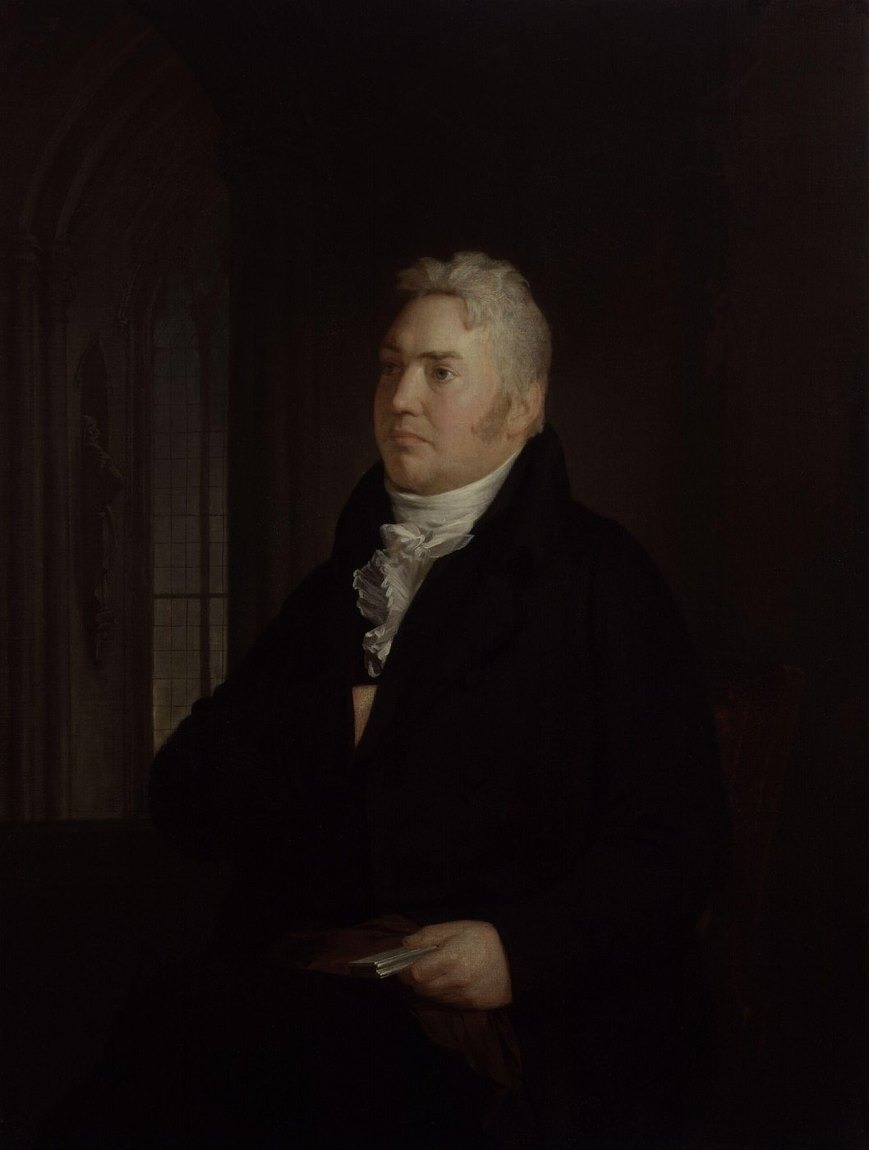
Coleridge was born in 1772 at Ottery St Mary in Devon, the youngest son of a clergyman. In 1798 he and William Wordsworth published Lyrical Ballads, which opens with his Rime of the Ancient Mariner. He was a poet, lecturer, critic and philosopher, a restless reader of Plato, Plotinus and the German idealists, and he spent the last years of his life in Highgate, where younger writers came to hear him talk. He died there in 1834.
He came early to the old philosophers. Charles Lamb remembered the schoolboy Coleridge in the cloisters of Christ’s Hospital, unfolding the mysteries of Iamblichus and Plotinus to anyone who would stop and listen; see The Golden Chain.
His poem Kubla Khan, published in 1816, came to him, he said, in a kind of reverie: two or three hundred lines composed without effort, which he began to write down on waking until he was called away by a person on business from Porlock. When he returned the vision had passed, and only the fragment remained. The story has become a parable of inspiration and of how easily it is lost.
In the Biographia Literaria of 1817 Coleridge set out his distinctions. The primary imagination is at work in all perception: to see the world at all is already to shape it. The secondary imagination is the conscious power of the maker, which “dissolves, diffuses, dissipates, in order to re-create.” Beneath both he placed fancy, which only rearranges what memory supplies and has, as he put it, no other counters to play with but fixities and definites.
The Order reads Coleridge’s account as its own conviction in another tongue. The human mind, in perceiving and in making, repeats on a finite scale the act by which a world is brought forth. For Coleridge the infinite I AM was the God of Exodus; others may understand the phrase as the ground of all being, or leave its meaning open; see The Supreme Divine. On any reading, the act of creation is the place where the human and the divine are most alike; see On Apotheosis.
A century later J. R. R. Tolkien took up the same thought in his essay On Fairy-Stories, calling the maker of an imagined world a sub-creator, who makes by the law in which he was made.