Thoth
The Egyptian god of writing and wisdom
Thoth was the Egyptian god of writing, reckoning and wisdom, and the deity in whom the Greeks recognised their own Hermes.
He was usually depicted as an ibis, as a man with the head of an ibis, or as a baboon. His principal cult centre was Khemenu in Middle Egypt, which the Greeks called Hermopolis, the city of Hermes. Thoth was credited with the invention of writing, served as scribe and messenger of the gods, measured time through the moon, and recorded the verdict when the heart of the deceased was weighed against the feather of truth.
When Greeks settled in Egypt after the conquest of Alexander, they identified Thoth with Hermes, the messenger god and patron of eloquence. Over the following centuries the two merged into a new figure, Hermes Trismegistus, the Thrice-Great. The epithet is generally traced to Egyptian titles that honoured Thoth as “great, great,” which Greek writers intensified still further.
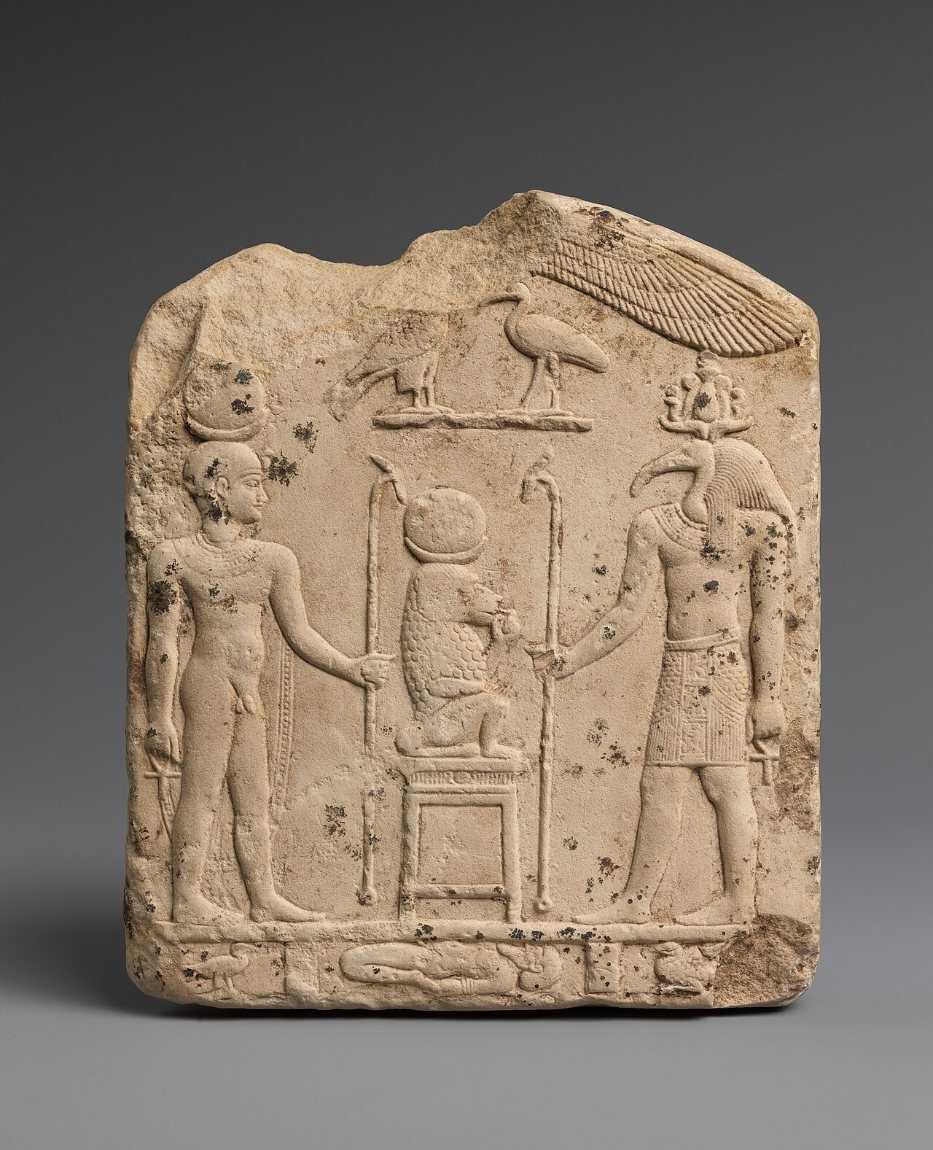
The stela illustrated here was carved in Roman Egypt in the first or second century AD. It shows Thoth in several of his forms at once, and it belongs to the same period in which the Hermetic writings were being composed, when the old god of scribes was becoming the teacher of a philosophy.
The Order regards Thoth as the Egyptian root of its patron. His association with writing is fitting. Writing is the art by which the works of the mind outlast their makers, and without it almost nothing in this archive would have survived.