The Three Signs
Life, stability and dominion
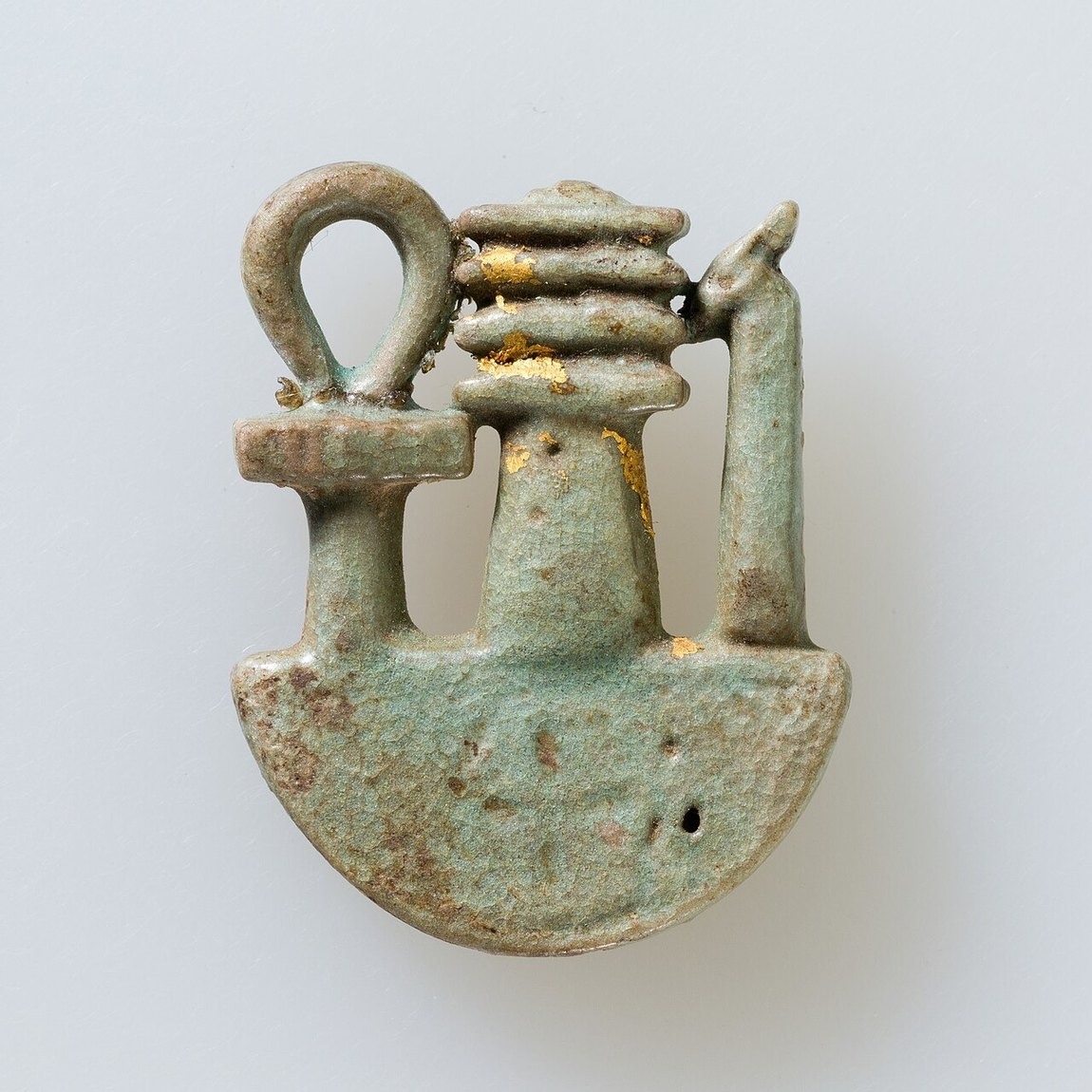
In Egyptian art the Ankh seldom stands alone. Again and again it appears beside two other signs, the djed-pillar and the was-sceptre, and together the three make up the fullest blessing the gods bestow. The Order reads in them its threefold charge.
Each of the three is a hieroglyph as well as an image. The Ankh writes the word for life. The djed, a pillar crowned with four bars, writes stability and endurance; it was called the backbone of Osiris, and the king himself raised a great djed in a rite of renewal. The was, a tall staff with a forked foot and the head of an animal, writes power or dominion. The gods carry it in their hands, and Thebes was called Waset, the city of the sceptre.
Together the three form one of the oldest blessings in the world. Again and again the inscriptions say of the king that he is “given all life, stability and dominion,” and temple walls are bordered with long friezes of the three signs side by side, as on the small amulet shown here, where they stand on the basket that writes “all.” Ptah, the maker-god of Memphis whose creation by heart and tongue stands in the Order’s Canon, is shown holding a single sceptre in which all three are joined.
The Order keeps the Ankh as its principal sign and sets the other two beside it, as the Egyptians did. It reads the three as its charge. The Ankh is life, the gift of a mind able to make: to create. The djed is what stands and endures: to preserve. The was is the power that sustains order and well-being: to uphold.
Two other signs recur in the archive. The golden chain that Homer imagined let down from heaven stands for the line of teachers, translators and readers through whom the inheritance has passed; see The Golden Chain. And the open book that Hermes holds out at the threshold of Siena Cathedral stands for the handing on of the Order’s thought, and so for the archive itself, offered to whoever enters; see The Patronage of Hermes.