
Poggio Bracciolini
The book-hunter
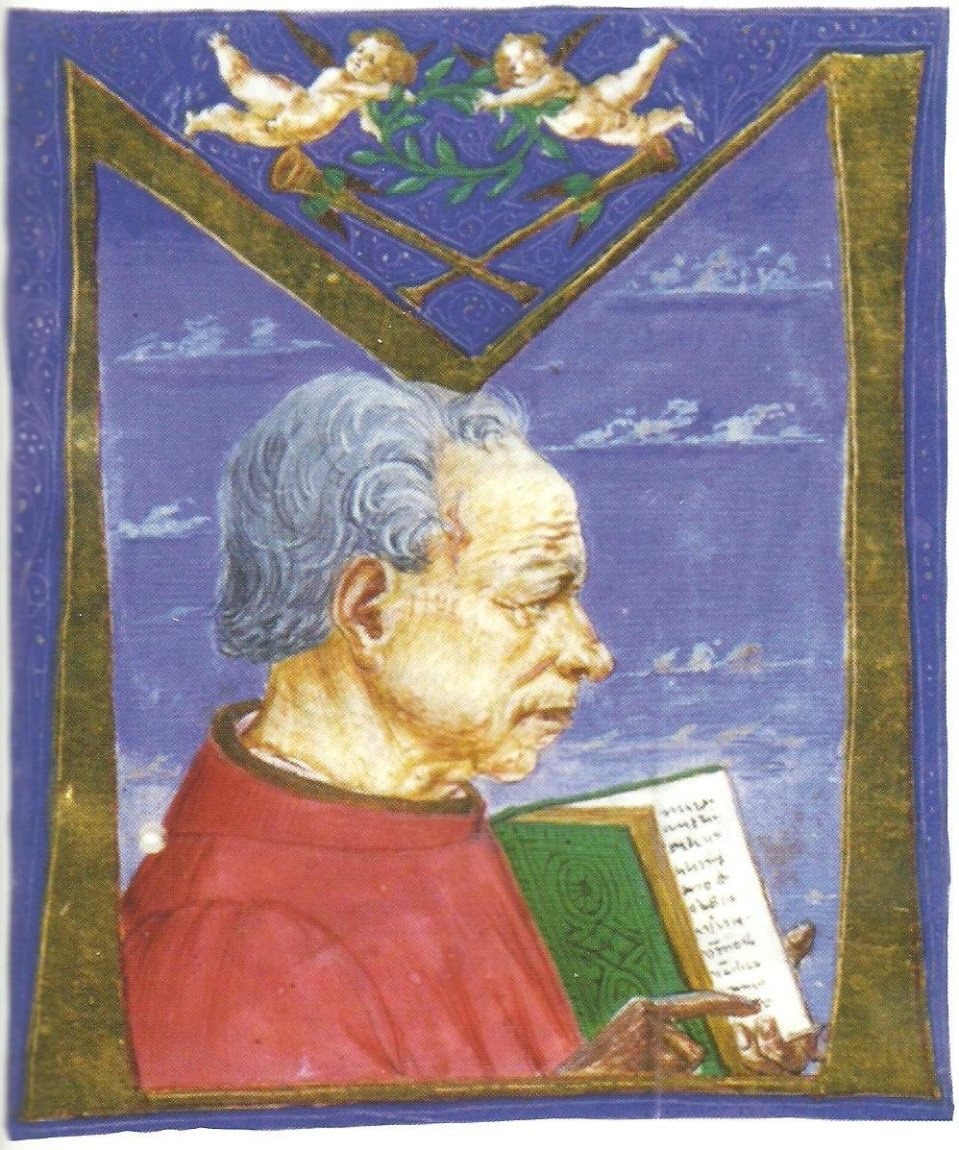
“There we found Quintilian, still safe and sound, though filthy with mould and dust.”
Poggio Bracciolini, letter to Guarino of Verona, 1416, paraphrased from the Latin
Poggio Bracciolini was a Florentine humanist and papal secretary who recovered from the monastery libraries of Europe works of ancient literature that had been all but lost.
Born in 1380 at Terranuova near Arezzo, Poggio trained in Florence as a notary and copyist, and entered the service of the papal court, where he spent most of his working life as a secretary. His handwriting, modelled on older manuscripts, helped to create the humanist script from which the roman type of printed books descends.
While attending the Council of Constance, between 1414 and 1418, he used his freedom to search the libraries of nearby monasteries. At St Gall in 1416 he found a complete text of Quintilian’s Institutes of Oratory, and in 1417, in another German monastery, a manuscript of Lucretius’s poem On the Nature of Things. Speeches of Cicero and works of several other Roman authors followed. He had copies made and sent them home to his friends in Florence.
In later life he returned to Florence, wrote dialogues, histories and a famous collection of jests, and served as chancellor of the republic. He died there in 1459.
Poggio stands in this archive as the model of all who seek out what has been forgotten; see Those Who Preserve and Cosimo de’ Medici.