
Murasaki Shikibu
The Tale of Genji
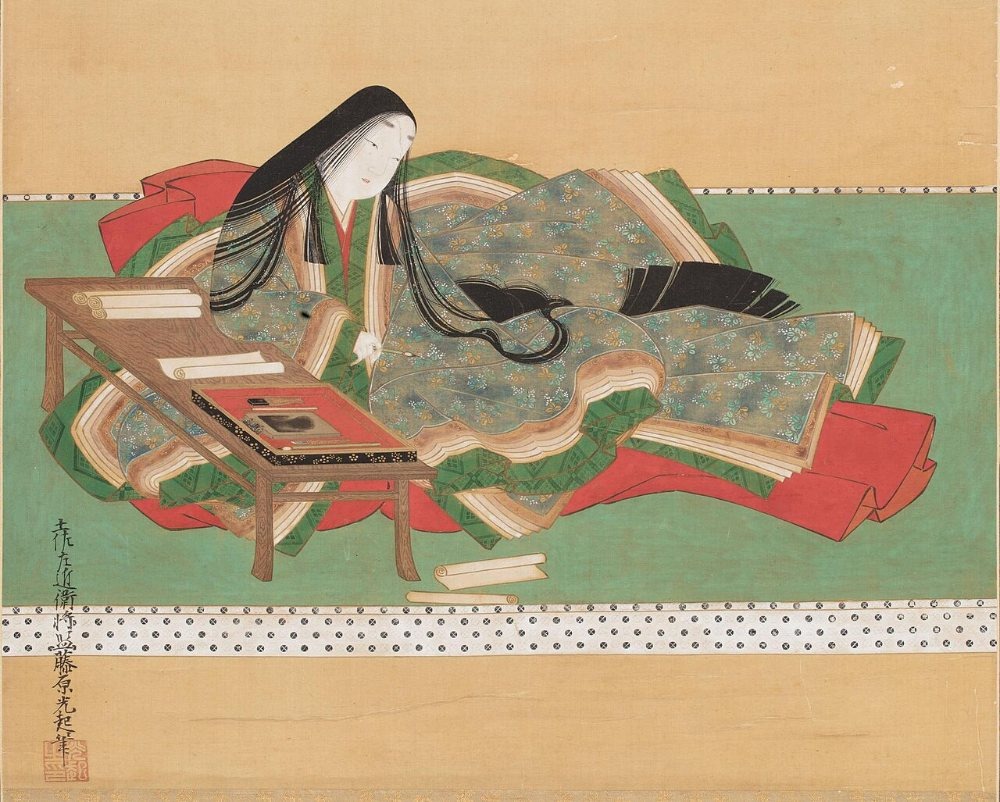
Murasaki Shikibu was a Japanese writer and lady-in-waiting at the Heian court, and the author of The Tale of Genji, often called the world’s first great novel.
Her real name is unknown. “Murasaki” is probably taken from a character in her own tale, and “Shikibu” from an office once held by her father, a scholar of Chinese literature who taught her alongside her brother. Widowed young, she entered the service of the Empress Shōshi around 1005, and kept a diary of court life that survives.
The Tale of Genji follows the life and loves of Hikaru Genji, the “shining prince,” and then of his descendants, across fifty-four chapters and some four hundred characters. It is a work of extraordinary psychological subtlety, attentive to the passing of time, the fragility of beauty and what Japanese aesthetics would call mono no aware, the pathos of things.
In the chapter called Fireflies, Genji teases a young woman absorbed in illustrated romances, and then defends them. The official chronicles, he says, show only a small part of what has happened in the world, while tales set down in detail what people have truly seen and felt. It is one of the earliest defences of fiction in any literature.
According to legend, Murasaki began her tale at the temple of Ishiyama-dera on Lake Biwa, inspired by the moon rising over the water; the scene became a favourite subject of later painters. A thousand years after it was written, the Genji is still read, illustrated and retold, and whole worlds of later art have grown from it.
Murasaki’s place on the Roll of Honour rests on that defence, which says in a few lines what the Order holds about meaning and historical truth, and on an imagined world that has outlived by a thousand years the court that produced it. Genji and those he loved never lived, yet generations have mourned and loved them as if they had; see Works That Come Alive.