Carl Gustav Jung
The mind and its images
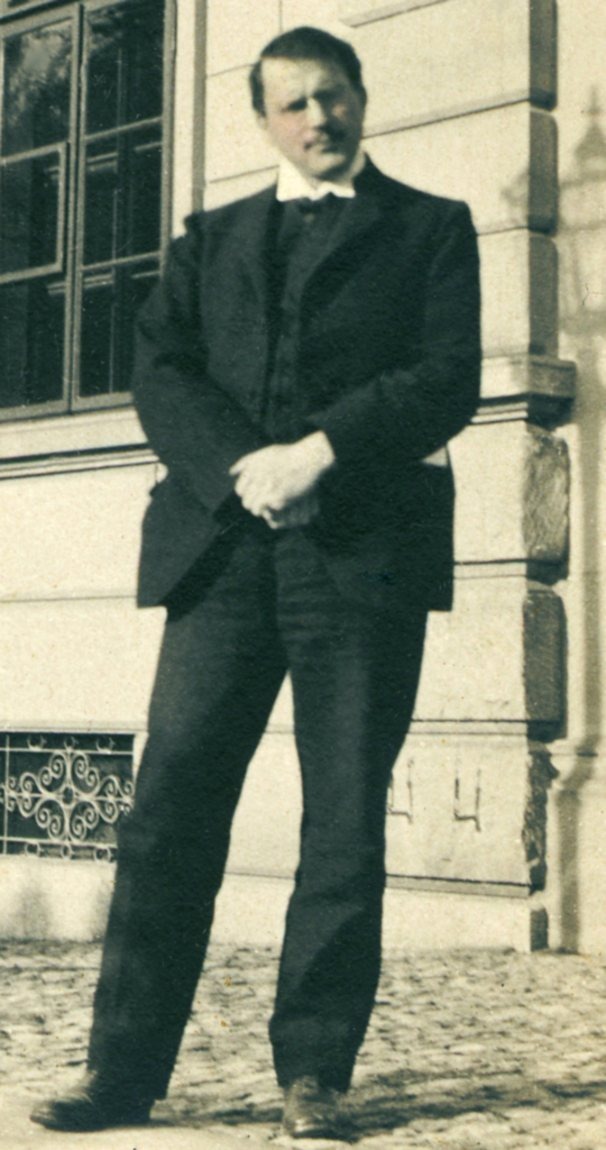
Carl Gustav Jung was a Swiss psychiatrist and the founder of analytical psychology, whose work on myth, symbol and the unconscious has influenced artists, scholars and religious thinkers throughout the world.
Jung trained in medicine at Basel and worked at the Burghölzli psychiatric hospital in Zurich under Eugen Bleuler. From 1907 he was the close collaborator of Sigmund Freud, until their break in 1913 over, among other things, the nature of the unconscious and of religious experience.
Jung came to believe that beneath each person’s memories lies a collective unconscious, shared by all humanity and expressed in recurring images and patterns he called archetypes. Myths, dreams, religious symbols and works of art were for him the languages in which the psyche speaks. He studied Gnosticism, alchemy and the Hermetic writings as records of that speech, and wrote an essay on the alchemists’ Mercurius, the descendant of Hermes.
After the break with Freud, Jung entered a long period of inner exploration. He recorded his visions in words and paintings in a great illuminated volume, later called the Red Book, on which he worked for some sixteen years; it was published only in 2009. From 1923 he built a stone tower at Bollingen on the lake of Zurich with his own hands, adding to it over three decades and carving its stones.
The Order’s regard for Jung rests on his account of how the human mind creates and is created by its images, and on his treating myth and symbol as realities of the psyche worthy of the most serious attention.