
Ernst Cassirer
The symbolic animal
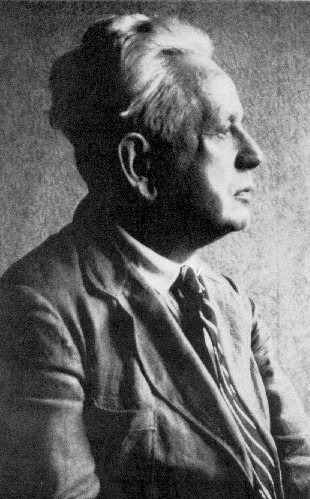
Ernst Cassirer was a German philosopher whose Philosophy of Symbolic Forms describes how human beings build their worlds through language, myth, art, religion and science.
Born in Breslau in 1874, Cassirer studied in Marburg and became a professor at the new University of Hamburg in 1919. There he worked closely with the extraordinary library of Aby Warburg, devoted to the survival of ancient images and symbols in later culture. In 1929 he became the university’s rector. When the Nazis came to power in 1933 he left Germany, teaching at Oxford, in Sweden and finally in the United States, where he died in 1945.
In the three volumes of The Philosophy of Symbolic Forms (1923–29) Cassirer argued that we never meet reality bare. We know it through symbolic forms, each a creative activity of the mind with its own structure: myth, language, art, religion, science. Myth, in his account, is not failed science but a genuine way of giving form to experience.
In An Essay on Man (1944) he proposed that the human being is best defined not as the rational animal but as the symbolic animal. The Order counts him among the clearest modern philosophers of the faculty it holds sacred.